Hi, what do you want to do?






PBS
Pbs Teachers: Story Writing With Arthur
This series of 12 downloadable activities teach students some basics of story writing, using books or videos from the PBS "Arthur" series as a springboard. Activities include creating story maps, asking questions about characters and...
Read Works
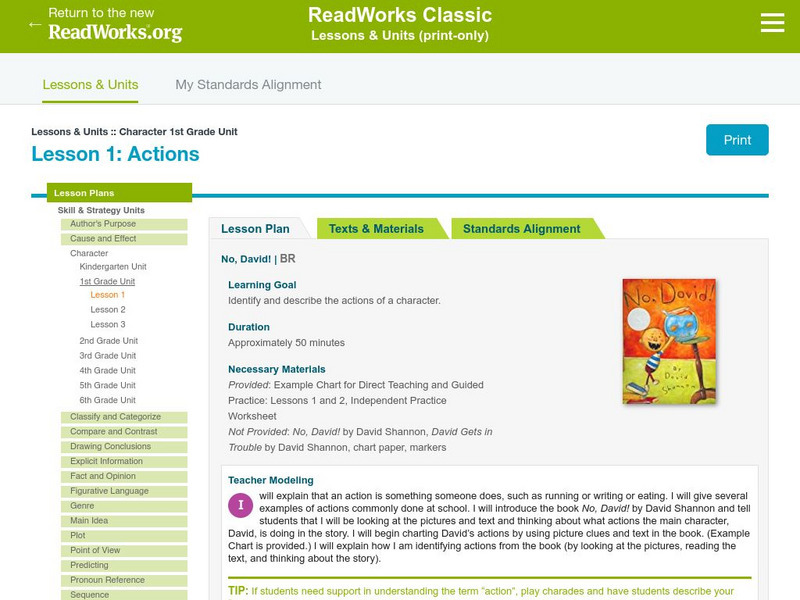
Read Works: Lesson 1: Actions
In this resource, students will practice identifying and describing the actions of a character. Teachers will model these skills through the use of text and pictures from the story No, David! by David Shannon. Students will then draw a...
Caro Clarke
Caro Clarke: What Is Conflict?
This is the sixth in a series of articles designed to help the new writer with their novel. This article focuses on conflict and how it effects the characters and the plot of the story. W.11-12.3a Narratives
Caro Clarke
Historical Fiction: Who Rules?
This is the fifteenth article in a series designed to help the new novel author. This article focuses on the genre of historical fiction and the role of the author. Is the author a researcher or a story-teller?
Other
National Writing Project: Collaborating to Write Dialogue
In this lesson, writing partners work together to develop a plot and characters. The lesson emphasizes the use of dialogue to develop the characters and plot of the story.

Blackdog Media
Classic Reader: "A Thief in the Night" by e.w. Hornung
A.J. Raffles is a character developed by E.W. Hornung who appears in most of his short stories. Raffles is the very definition of a smooth criminal and a master cricket player. Read several of the short stories containing Raffles in the...
Writing Fix
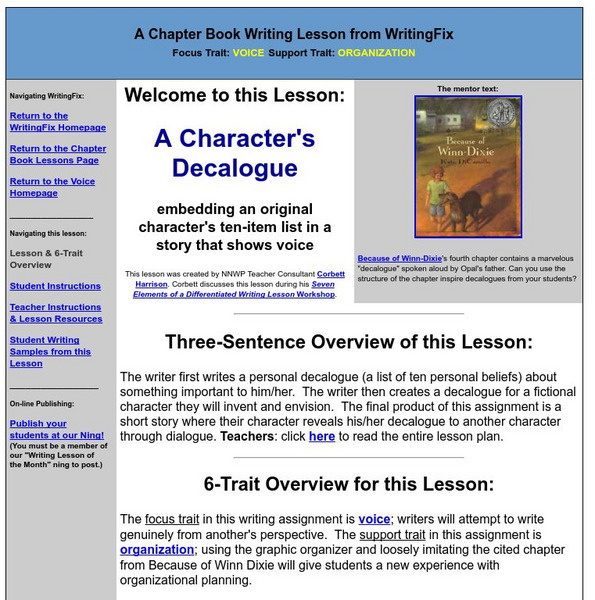
Writing Fix: A Character's Decalogue
In this instructional activity, the writer first writes a personal decalogue (a list of ten personal beliefs) about something important to him/her. The writer then creates a decalogue for a fictional character they will invent and...
Caro Clarke
Caro Clarke: Pacing Anxiety, or How to Stop Padding and Plot!
This is the seventh installment of a series giving advice to the author who is new to writing novels. This article focuses on how to take your characters and use them and their conflicts to develop the plot of your story. W.9-10.3b...
Writing Fix
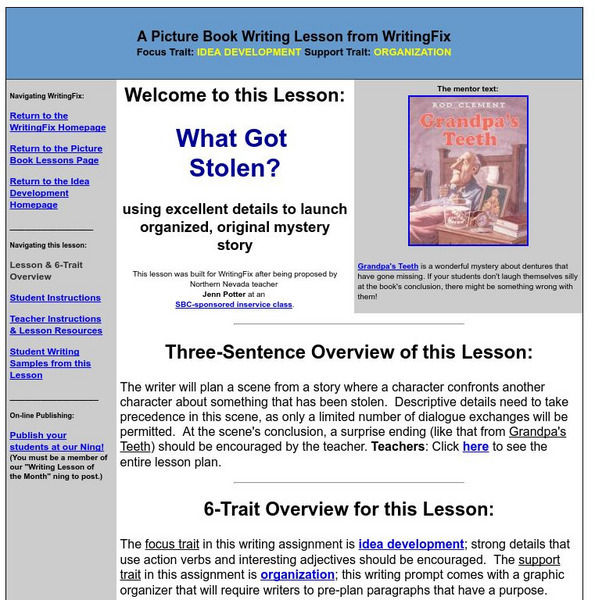
Writing Fix: What Got Stolen?
After reading Grandpa's Teeth by Rod Clement, the writer will plan a scene from a story where a character confronts another character about something that has been stolen. Descriptive details need to take precedence in this scene, as...
Utah Education Network
Uen: Writing a Letter Using the Book Mole's Hill
In this lesson, students will engage in writing activities as extensions to Lois Ehlert's book, Mole's Hill. Students will generate soluntions to conflicts in the story, generate ideas for writing letters, write an interactive letter to...

Other
Seekers Blog Spot: How Setting Affects Characters
Information and examples of different ways the setting of a text can affect the characters and character development. (Published: Sept. 29, 2016)
Caro Clarke
Not Stopping the Reader: How to Avoid Stumbling Blocks
This is the eighth article in a series that focuses on helping the new novel author. This article looks at how the author can avoid creating stumbling blocks that disrupt the flow of the novel.
Caro Clarke
Explaining Too Much: Why More Is Less
This is the eleventh article in a series that is designed to help the new novel author. This article focuses on how to eliminate needless information in your novel. The key is to not explain too much about the action.