Hi, what do you want to do?






Judicial Learning Center
Your 1st Amendment Rights
Why should classes care about the First Amendment? An engaging lesson serves as a powerful tool for answering just that. As all four cases in the lesson relate directly to freedom of expression in schools, young scholars explore the...

Judicial Learning Center
Your 4th Amendment Rights
Americans love to learn about their rights, especially those that protect them from the government's power to invade their privacy. Young people are especially engaged by this topic. An informative lesson explores four Supreme Court...

Judicial Learning Center
Civil Rights and Equal Protection
Almost every American is familiar with the Supreme Court case of Brown vs. Board of Education. Far fewer understand the constitutional reasoning or the wide-ranging consequences of the ruling in the field of criminology. The interesting...

Judicial Learning Center
Types of Court Cases
How can one court acquit someone of a crime, while another convicts the person of the same one? It's all because of the differences between civil and criminal trials. An informative resource provides scholars in the field of criminology...

Judicial Learning Center
Why Study Landmark Cases?
Why study landmark Supreme court cases? A helpful lesson offers a brief but valuable argument for the importance of these cases in the field of criminology. It introduces scholars to some key terms necessary for studying court cases and...
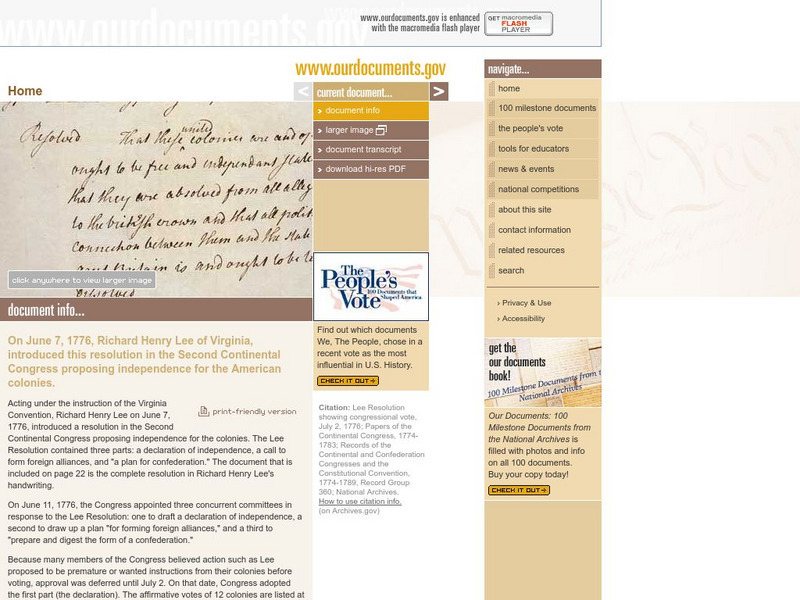
US National Archives
Our Documents: 19th Amendment to the u.s. Const.
This site contains a good overview of the 19th Amendment of the U.S. Constitution. It gives background information on women's suffrage, provides the transcript of the actual document, and allows you to view an image of the document.

Other
Constitution Day
Constitution Day commemorates the formation and signing of the U.S. Constitution by thirty-nine brave men on September 17, 1787, recognizing all who, are born in the U.S. or by naturalization, have become citizens. Learn about each of...
US Government Publishing Office
Ben's Guide to u.s. Government: Constitution of the United States
Find background information on the Constitution of the United States of America, and learn the three basic principles upon which the Constitution was written. Additional content includes a look at the text of the Constitution, the events...
Thomson Reuters
Find Law: u.s. Constitution: Eighth Amendment
This resource contains the text of the Eighth Amendment and legal annotations.
US Government Publishing Office
Ben's Guide to u.s. Government: Ways to Amend the Constitution
Ben's Guide is a fun way to present US laws to school aged children. This site presents a thorough investigation into ways to amend the Constitution. Links to related sites are available.

Scholastic
Scholastic: u.s. Constitution Changes With the Times
Clear, concise overview of the "voting" amendments to the Constitution. Includes quotes from 20th century Justices and Presidents about Amendments they thought were needed.
Teaching American History
Teaching American History: Bill of Rights Introduction
What is the Bill of Rights? Why were they created? Find out the purpose of these ten amendments to the U.S. Constitution and how they work to protect the citizens in the U.S.
Digital History
Digital History: The u.s., Cuba, and the Platt Amendment [Pdf]
After the SpanishAmerican War the American occupation of Cuba and the adoption of the Platt Amendment, which was forced upon the Cuban government when it formed its constitution, showed the signs of imperialism on the part of the United...
Teaching American History
Teaching American History: Bill of Rights
Enrich learning about the U.S. Constitution's Bill of Rights with the help of this comprehensive resource. Find details about the amendments added to the new national document.
Independence Hall Association
U.s. History: Women's Suffrage at Last
Trace the history of the women's suffrage movement from its organized beginnings in 1848 with the Seneca Falls Convention to the final success with the adoption of the 19th Amendment, which constitutionally granted women the right vote.
US National Archives
Nara: Charters of Freedom: The Bill of Rights
This site contains a complete transcription of The Bill of Rights, along with zoomable graphics of the original handwritten text. It also includes information about the historical context of the document, links to more constitutional...
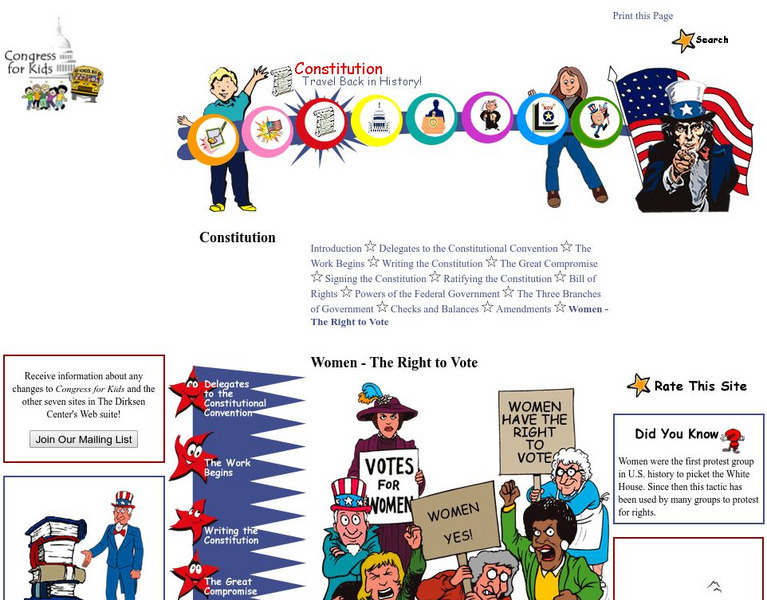
The Dirksen Congressional Center
Congress for Kids: Constitution: Women's Right to Vote
Information and activities that underscore the significance of the Nineteenth Amendment to the U.S. Constitution, which legalized women's right to vote.

Ducksters
Ducksters: Us Government for Kids: Constitution Amendments
Kids learn about the amendments in the United States Constitution. Seventeen not included in the Bill of Rights of the twenty-seven total.
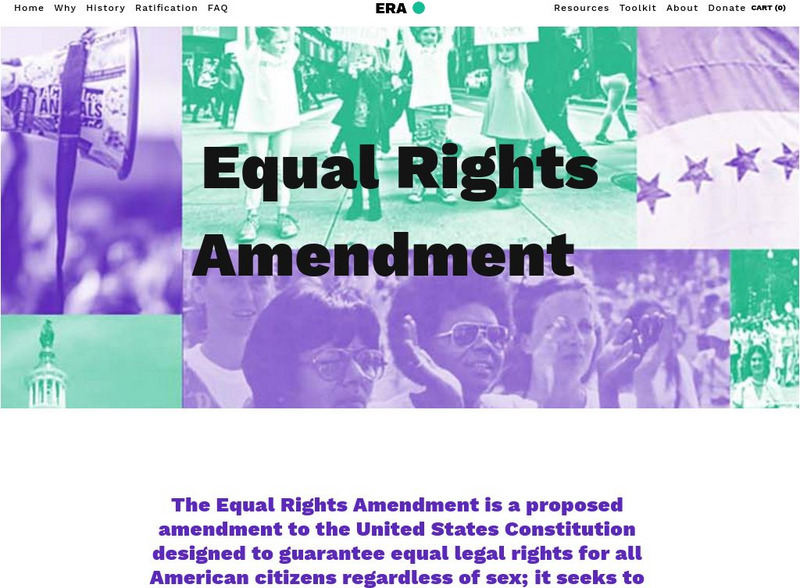
Other
Alice Paul Institute: The Equal Rights Amendment
This site contains the history of the amendment, an action update, strategy, supporters, and more.
Independence Hall Association
U.s. History: Radical Reconstruction
Read about the frustration the Radical Republicans in Congress had with the Reconstruction plans of Andrew Johnson. Find out what legislation they were able to pass over Johnson's veto, and how they attempted to protect emancipated...
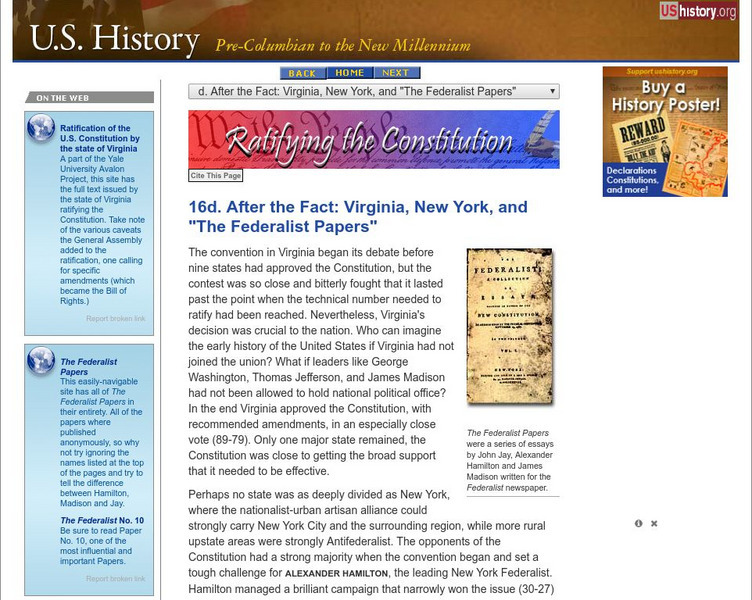
Independence Hall Association
U.s. History: After the Fact: Virginia, New Yok, and "The Federalist Papers"
Read about the necessity for Virginia and New York to support the ratification of the Constitution. See what influenced the vote in Virginia and how the legislature of New York was finally convinced.
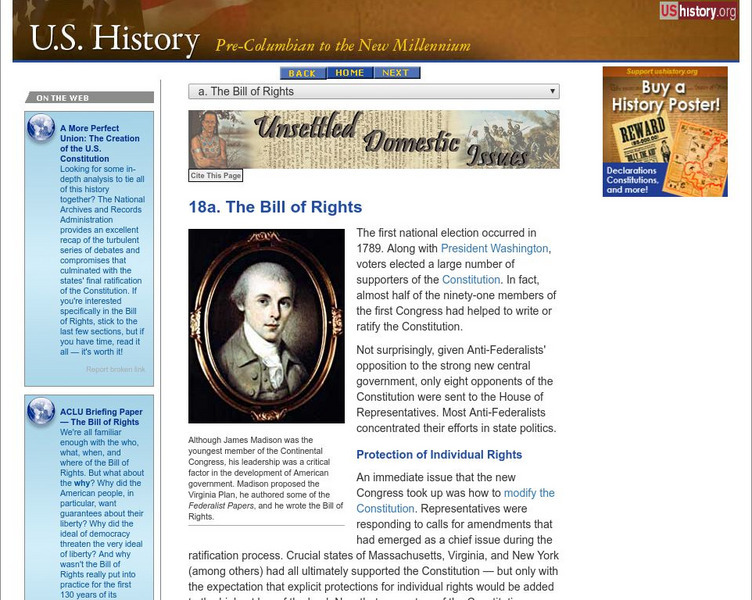
Independence Hall Association
U.s. History: The Bill of Rights
The Constitution spelled out the powers of the national government, but many Anti-federalists felt there should be equally explicit a guarantee of individual rights. Read about the compiliation of what became known as the Bill of Rights...
Teaching American History
Teaching American History: The Federalist/antifederalist Debate Bill of Rights
Identify the role of the debates between the Federalists and Antifederalists during the creation of the ten amendments to the U.S. Constitution.
Teaching American History
Teaching American History: The Politics of the Bill of Rights: Part Iii
Investigate what the politics were leading to the creation of the Bill of Rights. Identify how the debates in the first congress led to the stages of approval and ultimately the adoption of the ten amendments to the U.S. Constitution.