Hi, what do you want to do?






Curated OER
Last Moments of John Brown
Pupils read the history of John Brown. Using the internet, they research commentaries on the raid at Harper's Ferry. After observing a painting, "The Last Moments of John Brown," students analyze and write about what they see, think...

Curated OER
Erutan
Young scholars discuss that governments exist for many purposes. They describe that governments maintain social order, provide public services, provide national security, manage conflict, establish justice, and manage resources.

Curated OER
Discussion Questions about Human Nature
Students explore the different types of heros in American history.

Curated OER
Selavi
Students read the novel "Selavi". They relate the story to their own experiences. They also make predictions as they read the story. They research a specific aspect of Haiti once they have finished reading.
Library of Congress
Loc: Law: War Powers
Find the reasoning behind the War Powers Act, passed over President Nixon's veto in 1973. Presidential actions taken during the Vietnam War were the impetus for Congress to make a declaration of war more codified. See the times...
Yale University
War Powers Act
This is the original text of the 1973 War Powers Resolution that requires the President to consult with Congress before committing U.S. troops abroad.
American Presidency Project
American Presidency Project: Veto of the War Powers Resolution
Primary source document for students and teachers. President Richard M. Nixon's letter dated October 24, 1973, vetoing the War Powers Resolution.

PBS
Pbs Online News Hour: Rice on Iraq, War and Politics
Transcript of an interview of National Security Advisor Condoleezza Rice in September of 2002, discussing President George W. Bush's ideas about moving the US into war against Iraq.
US Army Center
U.s. Army Center of Military History: Peace Becomes Cold War, 1945 1950
A discussion of historical events that led to the Cold War from the perspective of the U.S. Army. Particular emphasis is placed on military leadership and policy.
Thomson Reuters
Find Law: Constitution
This site provides extensive information regarding several American constitutional issues such as: impeachment, war powers, interstate commerce, and the amendment process. Hyperlinks can be found throughout each constitutional issue to...
OpenStax
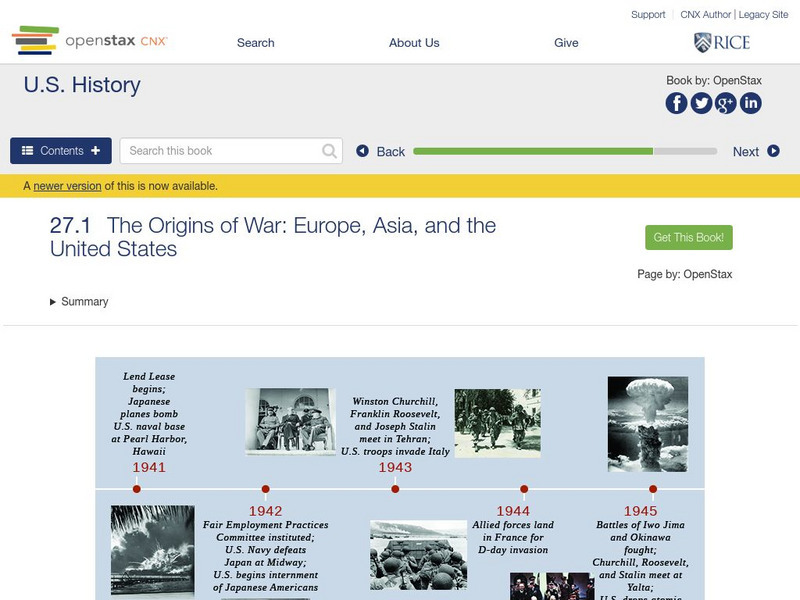
Open Stax: World War Ii 1941 1945: Origins of War: Europe, Asia and United States
Examines the conditions that fostered the rise of Fascism and Nazism, the events during the lead-up to the outbreak of war, and what Roosevelt did to help affected nations yet still keep the United States neutral.
Other
Presidents & the Constitution: War: Commander in Chief
The President of the United States has many powers. This site provides an extensive overview on the President's role as Commander in Chief and includes a video.
Independence Hall Association
U.s. History: The American Homefront
See how the people at home stepped up to support the war effort in World War II.
Other
The World at War: Axis Offensive 1941
The involvement of Great Britain was an important part of the allied attempts to defeat the axis powers. This site provides a timeline of events in World War II, and gives a good general idea of Britain's role in the events of war.
Other
Fas: Proposals to Enhance Congressional Oversight
This site is provided for by the Federation of American Scientists. After the Clinton Administration's experiences with Bosnia and Somalia, Congress sought to increase its legislative powers in military involvements and peacekeeping. The...

Khan Academy
Khan Academy: Ap Us History: 1890 1945: The United States in World War I
Discusses what triggered World War I, why the United States joined the war, and the impact the war had on life in the United States. Includes questions for students at end.

Other
Vox: 37 Maps That Explain the American Civil War
April 1865 was a momentous month in American history. On April 9, the Confederate army under Robert E. Lee surrendered to the Union forces of Ulysses S. Grant, effectively ending the Civil War. Then on April 14, the victorious President...

Khan Academy
Khan Academy: American Women and World War Ii
Read about the opportunities that women had during World War II to work in jobs that had previously been unimaginable. To assist working mothers, the first childcare programs were begun, and efforts were made to make jobs in the defense...
Other
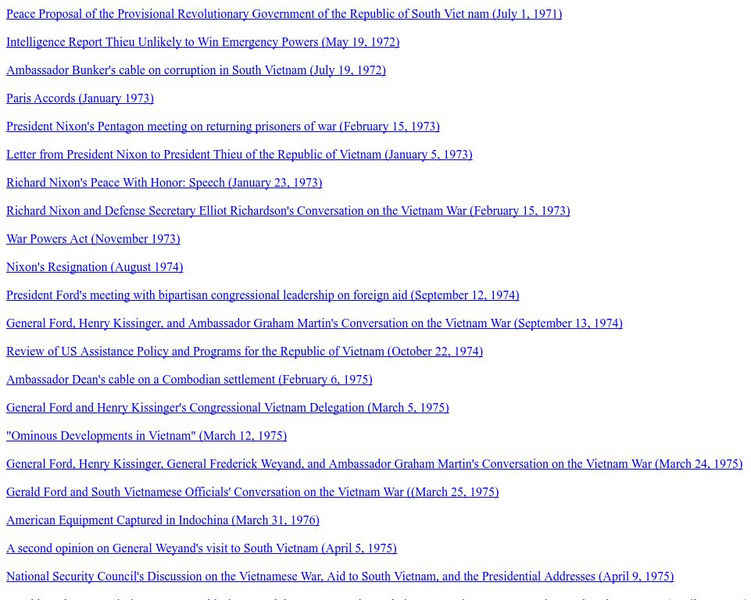
Links to Primary Documents & Classified Transcripts
Check out this page for a list of links to primary source documents regarding the last years of U.S. involvement in Vietnam, many of which are declassified transcripts of conversations between Gerald Ford and Henry Kissinger.
Other
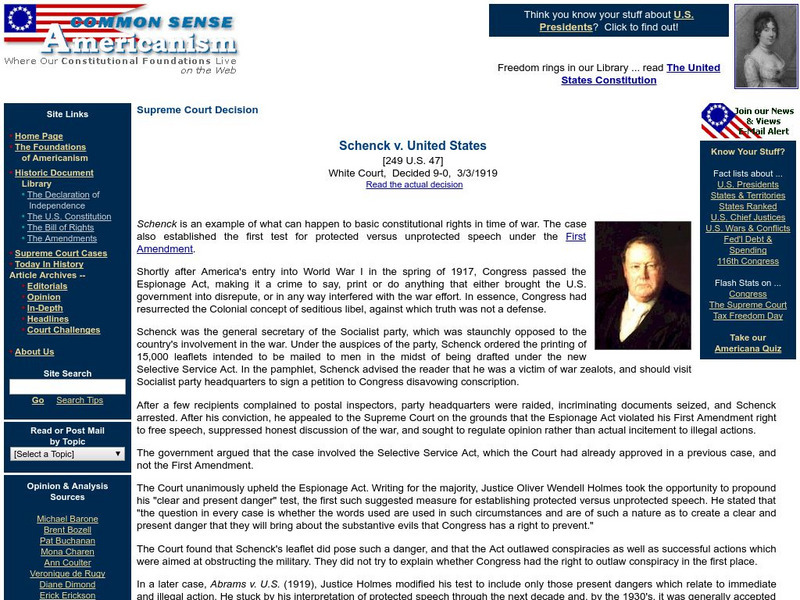
Common Sense Americanism: Schenck v. United States
This summary provides the background for Schenck v. United States, a World War I-era Supreme Court case involving free speech. Schenck is an example of what can happen to basic constitutional rights in time of war.

Discovery Education
Discovery Education: A Nation's Voice
A Nation's Voice is a lesson plan that uses internet sites, magazines and books, electronic encyclopedias and databases to understand the policy making of the U.S.
iCivics
I Civics: Changing the Constitution
America's constitutional government has changed over time as a result of amendments to the U.S. Constitution, Supreme Court decisions, legislation, and other practices. Students will use the seven basic principles found in our government...
PBS
Pbs News Hour: Your Safety and Security or Your Civil Liberties Lesson
The object of this lesson is to take a look at the USA Patriot Act and the controversies around the Act. Does the Patriot Act defy our Civil Liberties? This lesson will explore that question and more.
Other
New American Nation: Internationalism and Interwar Isolationism
This essay by two foreign policy scholars gives background to the concept that the United States did not really become isolationist after World War I.