Hi, what do you want to do?






US Geological Survey
Usgs: Surviving a Tsunami
Here's a common sense site about what to do in case you are in the area of a tsunami. This site is very interesting in that it provides lots of pictures of the damage a tsunami can do. Lessons were learned after these particular tsunamis.
Science Buddies
Science Buddies: Under Pressure: Sand Under Lateral Compression
Here's a project that involves a different kind of sandbox than the ones you usually think of. This one has a moving wall inside, acting like a piston, to compress the sand. You can make layers using two different colors of sand, and...
US Geological Survey
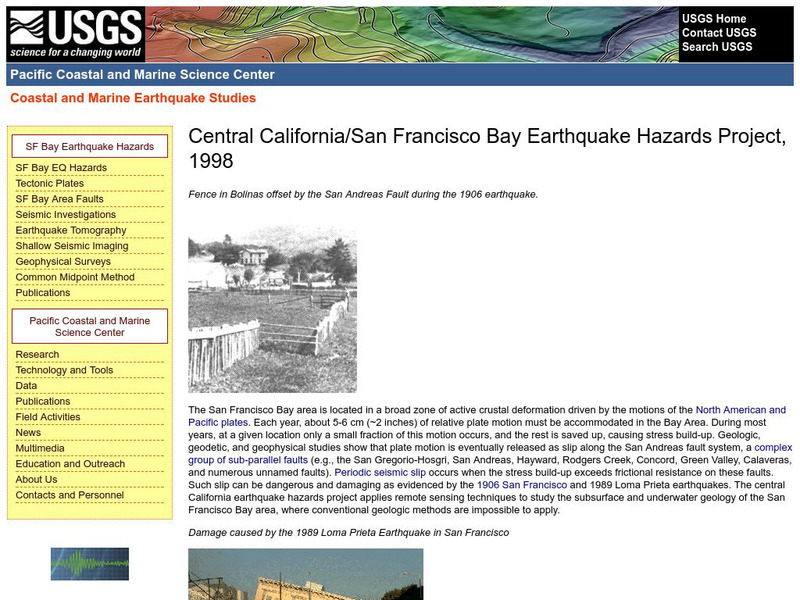
Central California Earthquake Hazards Project
Here is a review of the geology behind earthquakes and what is being done to predict the "Big One" on the San Andreas Fault.

Annenberg Foundation
Annenberg Learner: Interactives: Dynamic Earth: Slip, Slide, & Collide
Looking for more information about plate tectonics and what happens at plate boundaries? This site gives definitions of all plate boundaries as well as animations to help visualize what is happening.
University of Georgia
University of Georgia: What Science Isn't
This series of notes from a geology professor explores and explains several misconceptions about the nature of science. Sections are titled: A Historical Perspective; Science Isn't Art; Science is not Technology; Science isn't Truth and...
Other
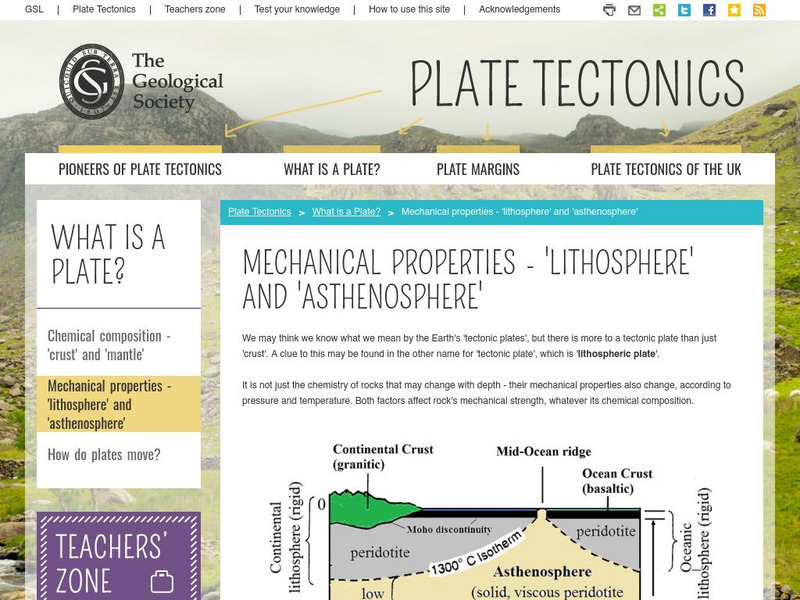
The Geological Society: Plate Tectonics: Mechanical Properties: 'Lithosphere' and 'Asthenosphere'
This resource describes how the mechanical properties of the lithosphere and asthenosphere change as the temperature and pressure increase. This can cause rocks to flow and become plastic-like.
Other
Black Hills Institute of Geological Research, Inc.: Sue T. Rex Story
Sue T. Rex is the largest, most complete Tyrannosaurus Rex skeleton to date. Its discovery and excavation by the Black Hills Institute is described in these pages. Sue now resides at the Field Museum in Chicago. What's unique about Sue...
Enchanted Learning
Enchanted Learning: Zoom School: Oceans
Find out why the oceans are blue and what causes waves by clicking here. There is a table of information about the four oceans as well as interesting facts on waves, salinity, and tides.

Education.com
Education.com: Free Worksheets and Printables for Kids
[Free Registration/Login Required] A large collection of worksheets that are free to download. Choose a grade, subject and topic to see what is available.
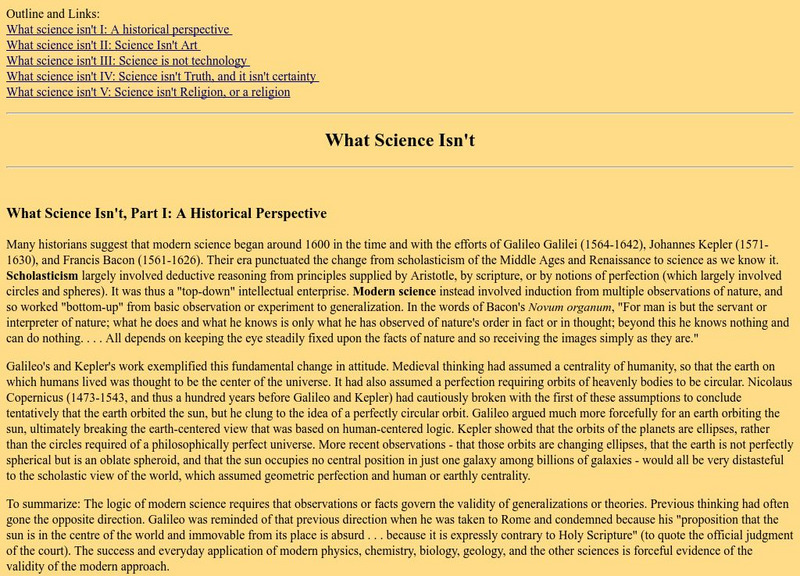
University of Georgia
University of Georgia: Geology: What Science Isn't
A portion of a paper titled "What is Science?" provides a very brief historical summary.
Columbia University
Scientific Background on the Indian Ocean Earthquake and Tsunami
This site features information and related links that can be used by students and scientists to understand the events that led to the December 2004 Indian Ocean tsunami.
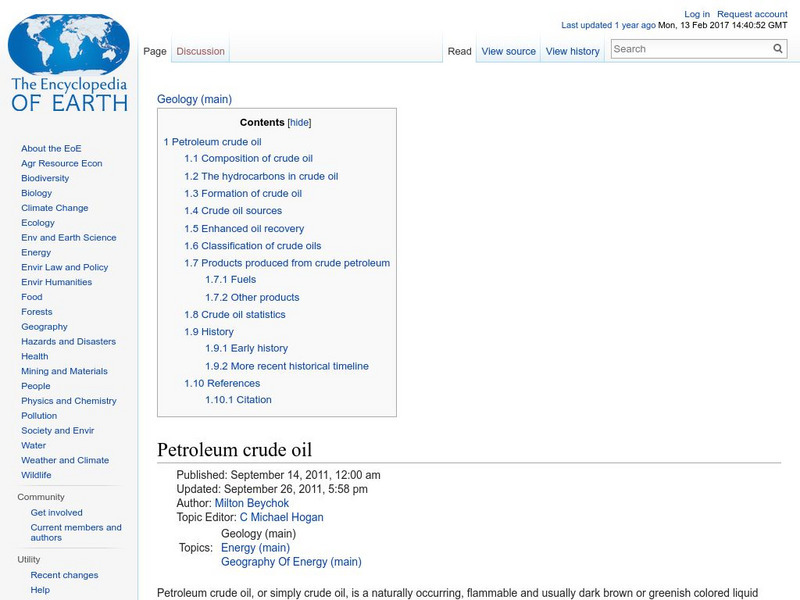
Encyclopedia of Earth
Encyclopedia of Earth: Geology: Petroleum Crude Oil
Article explaining what petroleum crude oil is, its composition, how it is formed, sources, how it is recovered, different classifications, products made from it, and its history. Includes a chart showing statistical information for...

Science Buddies
Science Buddies: Porosity and Particle Size
Often, when we think of something that is solid we think about rocks. But in reality, rocks have tiny holes of air inside them. This is called porosity. In this experiment you can find out what it means to be "solid as a rock."
Treehut
Suzy's World: Life on Earth
This site from Suzy's World, which is a personal site from Suzy Cato, explores what evolution is, and how long there has been life on earth. Content includes fun facts, a great experiment, and a classroom activity.
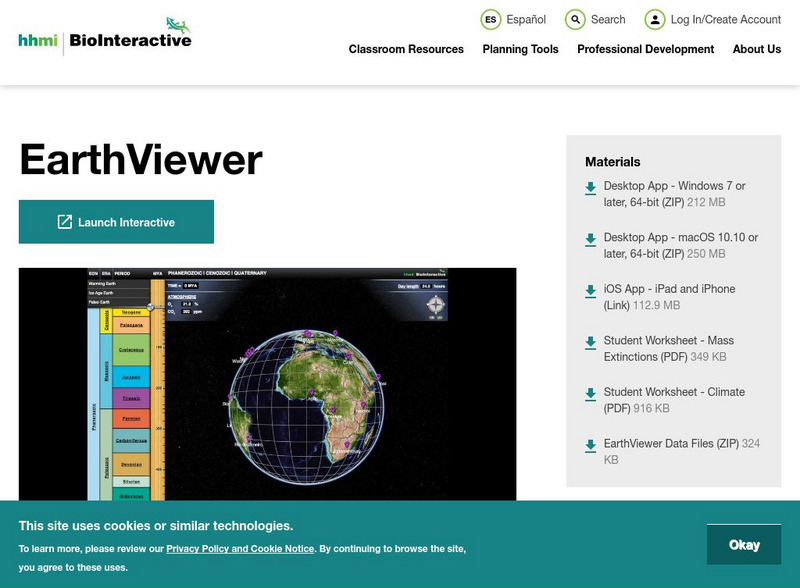
Howard Hughes Medical Institute
Hhmi: Biointeractive: Earth Viewer
Watch the earth change with this interactive app? What did Earth look like 250 million years ago? Or 1 billion years ago? Or 4.5 billion years ago? What was the climate like in the deep past? Find the answers with EarthViewer, an...
US Geological Survey
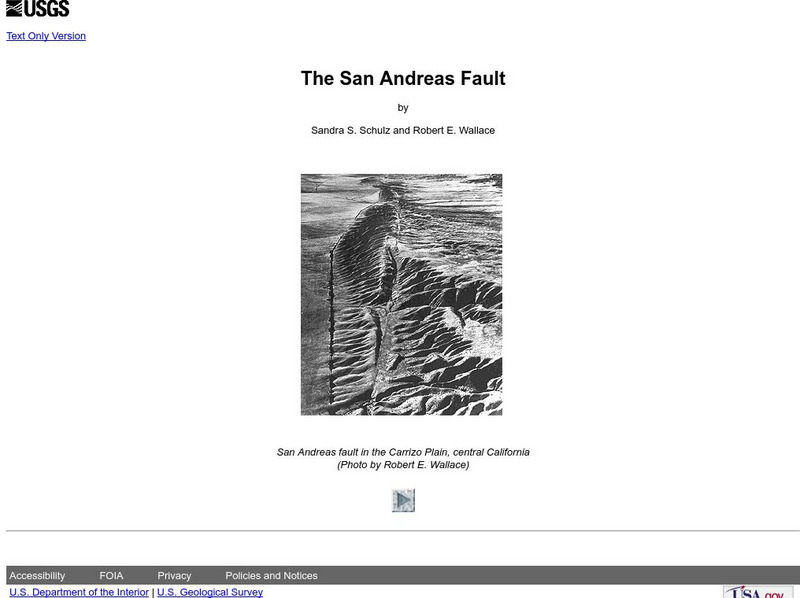
Usgs: The San Andreas Fault
A great overall site that tells us about the San Andreas fault, where it is and what kind of movements have occurred. It then goes on to talk about earthquakes in general and their occurrences along fault lines.

TeachEngineering
Teach Engineering: Survive That Tsunami!
Students use a table-top-sized tsunami generator to observe the formation and devastation of a tsunami. They see how a tsunami moves across the ocean and what happens when it reaches the continental shelf. Students make villages of model...
Science Education Resource Center at Carleton College
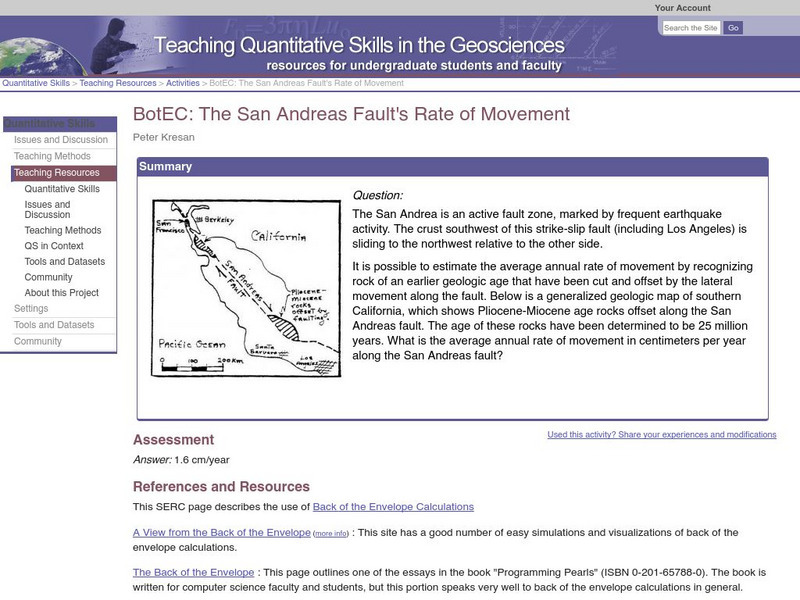
Serc: Bot Ec: The San Andreas Fault's Rate of Movement
The San Andrea is an active fault zone, marked by frequent earthquake activity. The crust southwest of this strike-slip fault (including Los Angeles) is sliding to the northwest relative to the other side. It is possible to estimate the...
Other
Denver Museum of Nature and Science: Ancient Denvers
What did Denver look like millions of years ago? Find out the answer to this and see how it has changed over time. There is also a list of parks to visit in Colorado.
US Geological Survey
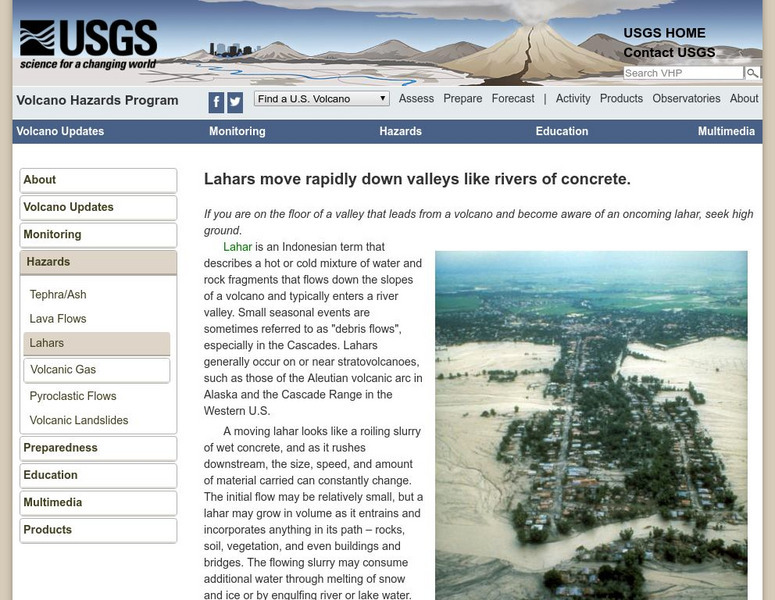
Usgs: Volcano Landslides and Their Effects
Describes what a volcano landslide is, how they occur, the effects of these landslides, and case studies.
eSchool Today
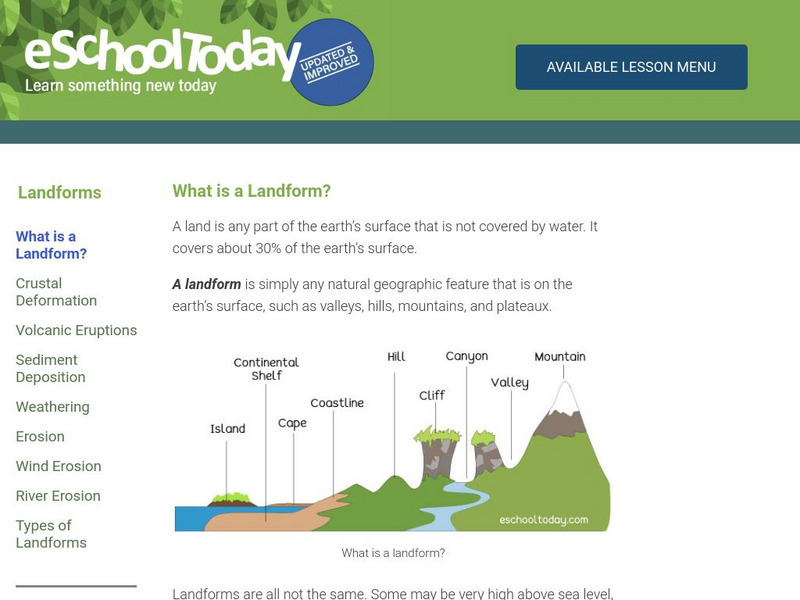
E School Today: Landforms
Understand the formation and geology of different landforms around the Earth.
Science Education Resource Center at Carleton College
Serc: Mn Step: Relative Dating Using "The Block"
This lesson involves an innovative strategy for introducing the concept of relative dating using a block of wood that has been painted, damaged, and nailed. The task for young scholars is to analyze the order in which these events...
Discovery Education
Discovery Education: Dynamic Earth, Tsunami
Use this site to teach your students what a tidal wave or tsunami is from this lesson plan. The discovery activity shows how a tsunami happens.
Other
University of Wisconsin Green Bay: Faults and Earthquakes
This site is primarily set up as an outline and is loaded with graphs, maps, and images. It covers a variety of earthquake-related topics, such as what causes earthquakes, fault lines and structures, seismology, a historical look at...