Hi, what do you want to do?






Harvard University
Harvard Univ.: Harvard College Writing Center: Ending the Essay: Conclusions
This resource teaches how to write a conclusion for an essay. Also includes a few pointers on how not to end one.
University of Victoria (Canada)
The U Vic Writer's Guide: Writing Essays: Essay Conclusions
Explains the purpose of the conclusion and how it relates to the thesis and introduction of the essay.
Writing Fix
Writing Fix: Picture Book Writing Lesson: Pros, Cons, and Interesting Hooks
Inspired by the picture book How I Became a Pirate by Melinda Long, an enthusiastic tale that explores the pros and cons of being a pirate, students will research an interesting job and prepare to write about it. While researching, the...
Other
Sonic Storytelling: Writing Method for Radio Drama
This article is filled with tips for beginners on how to write radio drama sketches or adapt stories into radio plays. You'll see examples of sketches as well as tips on writing well. W.9-10.3, 3a, 3b Narratives, W.11-12.3, 3a, 3b...

Science Buddies
Science Buddies: Scientific Method Conclusion
The conclusion of a science experiment summarizes how your results supported or contradicted your hypothesis. See a sample of a conclusion and find out what makes a good conclusion.
Lumen Learning
Lumen: Boundless Communications: Conclusion
This lesson focuses on writing the conclusion of your speech including the role of the conclusion, summarizing ideas, signaling the end, and managing Q&A.
Other
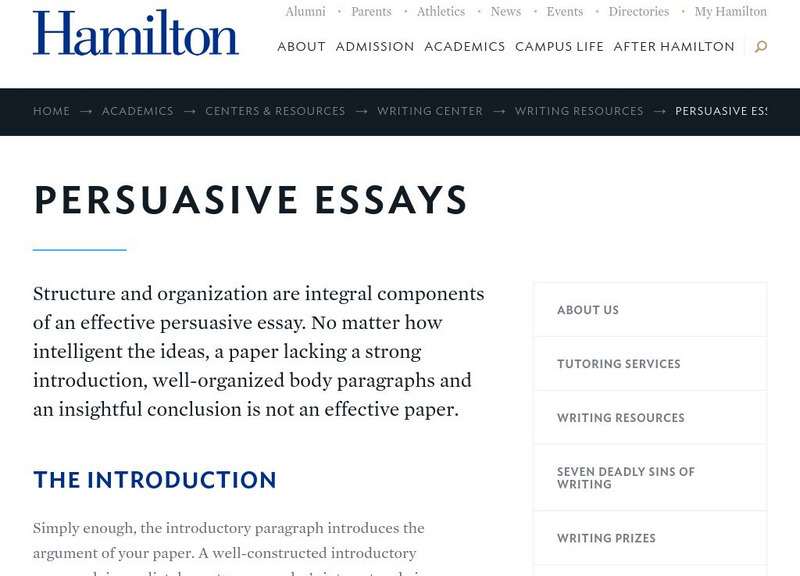
Hamilton: Essentials of Effective Persuasive Essays
This resource provides good insight on how to structure a well organized effective persuasive essay.
Online Writing Lab at Purdue University
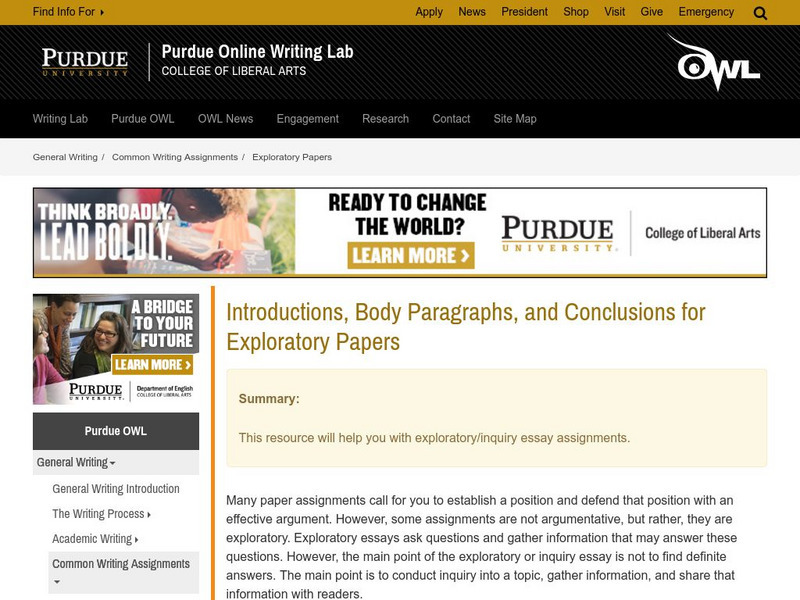
Purdue University Owl: Introductions, Body Paragraphs, and Conclusions
This handout focuses on what an exploratory or inquiry paper is and how to write the introduction including the questions you need to answer and setting the context, stating why the main idea is important, and stating your research...
Writing Fix
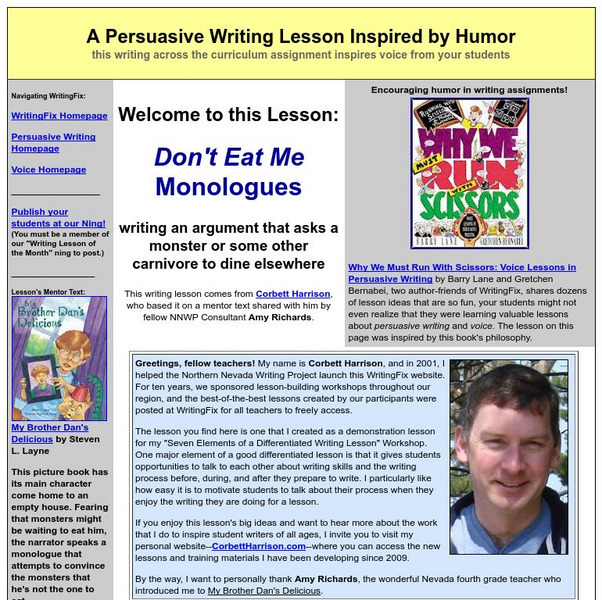
Writing Fix: Don't Eat Me Monologues
In this lesson, students will create a 5-part (introduction, 3 ideas, conclusion) monologue incorporating persuasive techniques and strong word choice.
Writing Fix
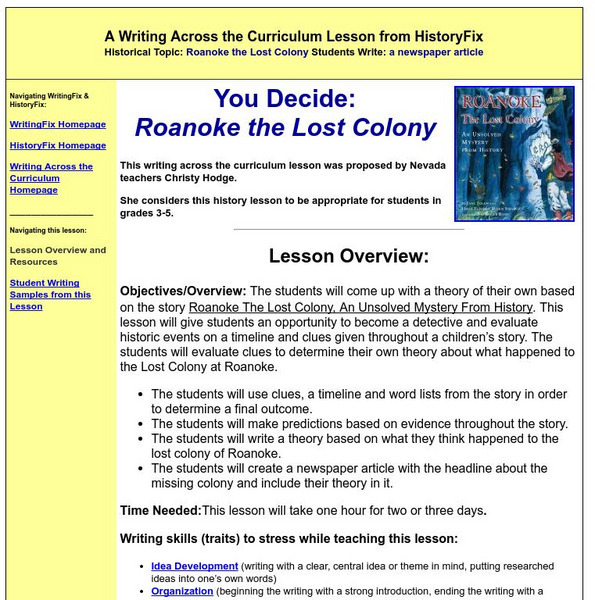
Writing Fix: You Decide: Roanoke the Lost Colony
Inspired by Roanoke The Lost Colony, An Unsolved Mystery From History, students will learn and discuss this mysterious part of American history. Doing their own detective work they will make predictions and come to a conclusion regarding...
University of North Carolina
The University of North Carolina at Chapel Hill: The Writing Center: Speeches
Tips and information about giving effective speeches including: What's different about a speech?, What's your purpose?, audience analysis, creating an effective introduction, making your speech easy to understand, helping your audience...
National Endowment for the Humanities
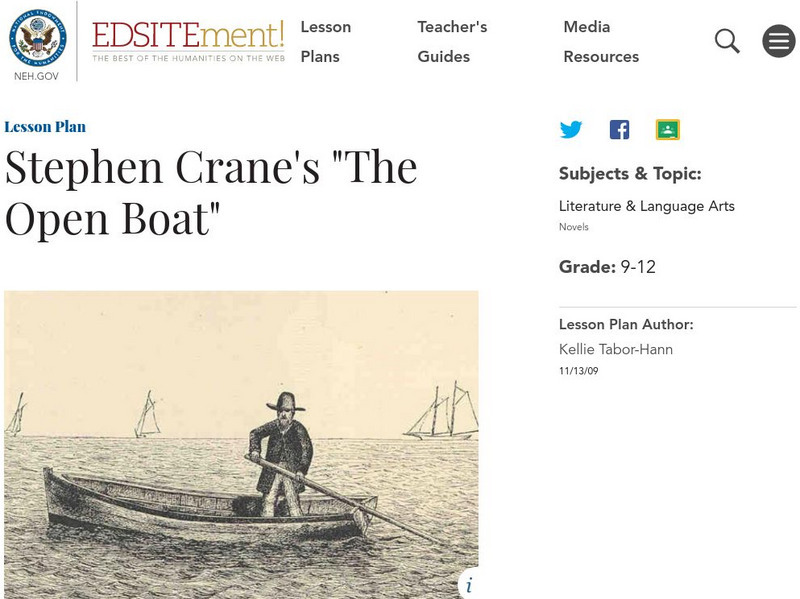
Neh: Edsit Ement: Stephen Crane's "The Open Boat"
In this lesson, students will examine the relationship of man and nature as portrayed in "The Open Boat," based on Crane's suffering from a shipwreck on The Commodore in which he spent thirty hours on a small boat at sea before being...
Lumen Learning
Lumen: Writing Skills: Introduction to Effective Introductions and Conclusions
This article provides an introduction to identifying strategies for writing effective introductions and conclusions. Click next on the bottom right to continue.
Lumen Learning
Lumen: Research Process: Conclusion to Research Process
This article focuses on the real purpose of research, to learn about the subject of the investigation as much as possible and then form those theories, opinions, and arguments on the basis of this newly found knowledge and understanding...

Lumen Learning
Lumen: Critical Reading: Conclusion to Critical Reading
This lesson focuses on the importance and purpose of reading. It features an article entitled "The Benefits of Leisure Reading."
Lumen Learning
Lumen: Grammar: Conclusion to Grammar
This lesson focuses on grammar in language. It discusses the importance of using correct grammar, and the "Weird Al" Yankovic - Word Crimes" video.
National Endowment for the Humanities
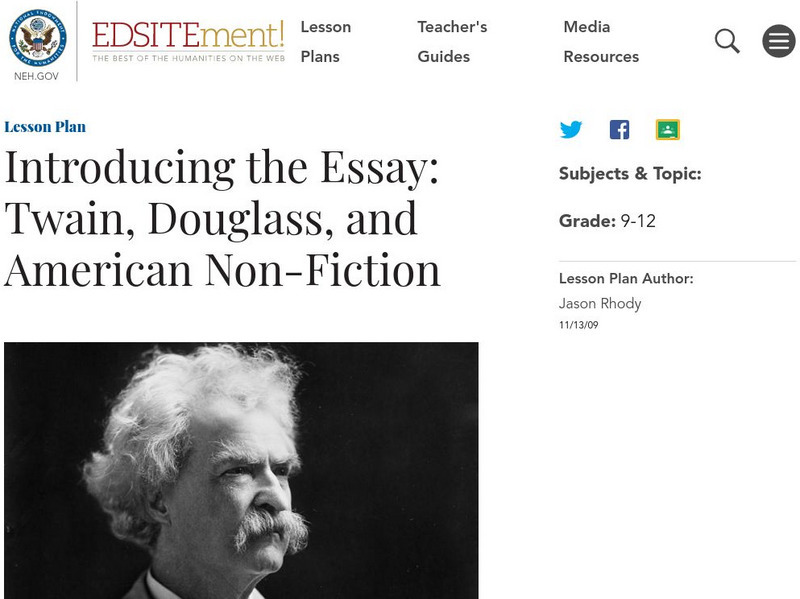
Neh: Edsit Ement: Introducing the Essay: Twain, Douglass and American Non Fiction
This lesson plan serves as an introduction to American literary non-fiction writing and focuses primarily on teaching some basic approaches to recognizing rhetorical strategies adopted for persuasive effect in essays and non-fiction. The...
National Endowment for the Humanities
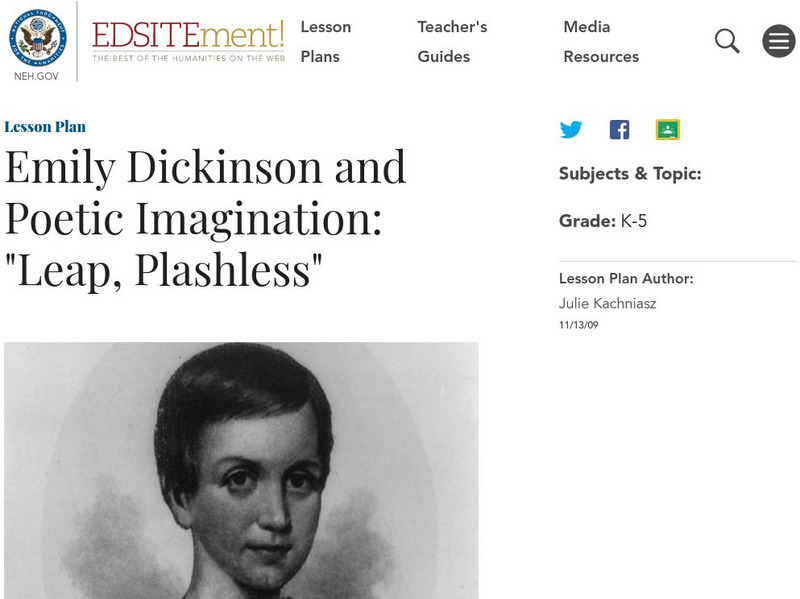
Neh: Edsit Ement: Emily Dickinson & Poetic Imagination: "Leap, Plashless"
This lesson introduces students to Emily Dickinson's poetry which often reveals a child-like fascination with the natural world. Students examine how she writes perceptively of butterflies, birds, and bats and uses lucid metaphors to...
Writing Fix
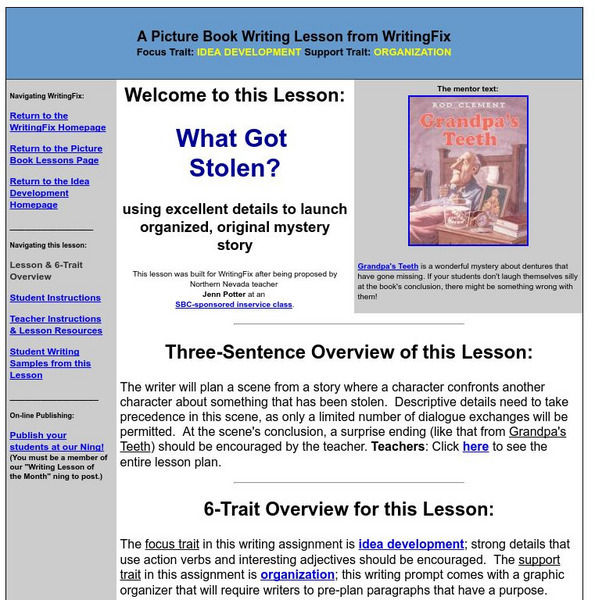
Writing Fix: What Got Stolen?
After reading Grandpa's Teeth by Rod Clement, the writer will plan a scene from a story where a character confronts another character about something that has been stolen. Descriptive details need to take precedence in this scene, as...
Sophia Learning
Sophia: Argument Papers
A series of six screencast lessons explaining the process of argumentative writing. The first [4 min. 22 sec.] focuses on overall structure and purpose. The second [6 mins, 18 secs] explains how to state a claim. The third [6 min. 3...

Joe Landsberger
Study Guides and Strategies: Expository Essays
This page has eight basic steps for writing expository essays: select topic, write the thesis, choose a method of development, organize, write topic sentences for body paragraph, write the body paragraphs, write an introduction, and...
Online Writing Lab at Purdue University
Purdue University Owl: Expository Essays
An explanation of an expository essay and its structure: thesis statement, logic transitions, introduction, body, conclusion, support, and creativity.

Quizlet
Quizlet: Elements of an Argument Match
Argument terms are included in this review "Match" game. Questions are provided for the following words in this review exercise. for the following words: argument, claim, support, reasons, evidence, and counterargument.
National Endowment for the Humanities
Neh: Edsit Ement: Introducing Metaphors Through Poetry
This lesson is designed to help students begin to engage with metaphors on a deeper and more abstract level. The lesson will begin with a poem containing metaphors accessible at all levels, and with each poem, the lesson will progress in...