Hi, what do you want to do?






Nature New Brunswick
Habitat for Endangered Wildlife and You
Compare and contrast your habitat with that of endangered plants and animals! Learners discuss what a habitat is actually comprised of, describing what theirs looks like. They fill out a graphic organizer explaining what they eat, how...

Rainforest Alliance
Looking at Leaves
Discover the Colombian rainforest through a presentation that follows a young girl named Chayo. Chayo describes her daily life, exploring the rainforest filled with plants and animals. After getting to know Chayo, scholars go...

Rainforest Alliance
Protecting the Critical Habitat of the Manatee and Loggerhead Turtle
Explore ocean habitats with a lesson that showcases the home of manatees and loggerhead turtles in Belize. Here, pupils compare and contrast the homes of ocean animals to those of humans, listen to an original short story about...

PBS
Season Seeking
It's a time of change. A hands-on activity engages young scientists in a lesson highlighting the change of seasons. They brainstorm indicators of season changes in nature and then look for them. Next, they record observations in a field...

ARKive
Temperate Rainforest in the Pacific Northwest
Explore the amazing temperate rainforest of the Pacific Northwest. Your class starts by investigating the animals and plants of the Northwest, specifically Washington, and then research an animal population common to the area. In small...

It's About Time
The Changing Geography of Your Community
Lead your class in exploring their local communities as well as the general environment. As they determine continental distributions by investigating minerals, rocks, and fossils located in their local region, pupils construct...

NOAA
Climate Is Our Friend…Isn’t It?: Make an Extinction Polyhedron
Climate affects populations in different ways. Scholars research extinct organisms and mass extinctions in part three of the 10-installment Discover Your Changing World series. They create graphic organizers, then fill in the...

NOAA
Toxic! Or Is It?
Super scientists tests the toxicity of water using radish seed bioassays. Over the course of five days, scholars observe the germination process of several radish seeds, looking closely at their roots to determine the level of toxins...

National Park Service
The Water Cycle Game
Take young scientists on a trip through the water cycle with this interactive science activity. After setting up a series of ten stations representing the different places water can be found, children use the included printable dice...
TeachEngineering
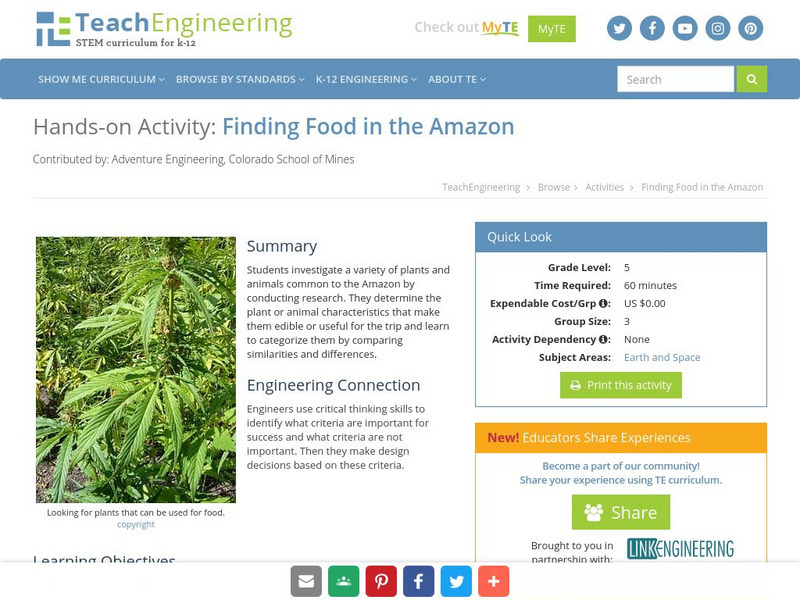
Teach Engineering: Finding Food in the Amazon
In this activity, the students will investigate a variety of plants and animals common to the Amazon through research. They will determine the plant or animal characteristics that make them edible or useful for the trip and learn to...
Read Works
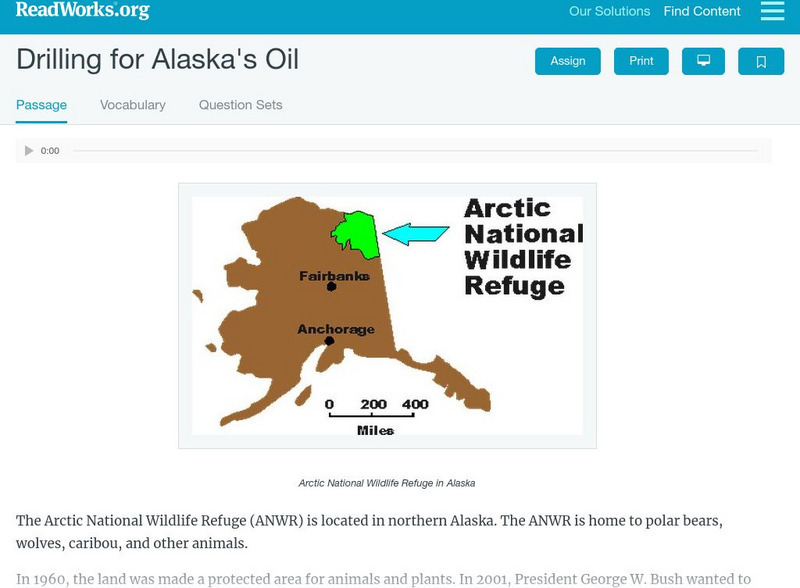
Read Works: Drilling for Alaska
[Free Registration/Login Required] Students read about drilling for oil in Alaska. A question sheet is available to help students build skills in comparing and contrasting.
Science Education Resource Center at Carleton College
Serc: Phenology and Weatherguide Calendar
An activity where students observe the grounds around their school to study the plant and animal life cycle. Students will make a map of the school to keep track of their observations. Students will also compare their phenology calendar...
Houghton Mifflin Harcourt
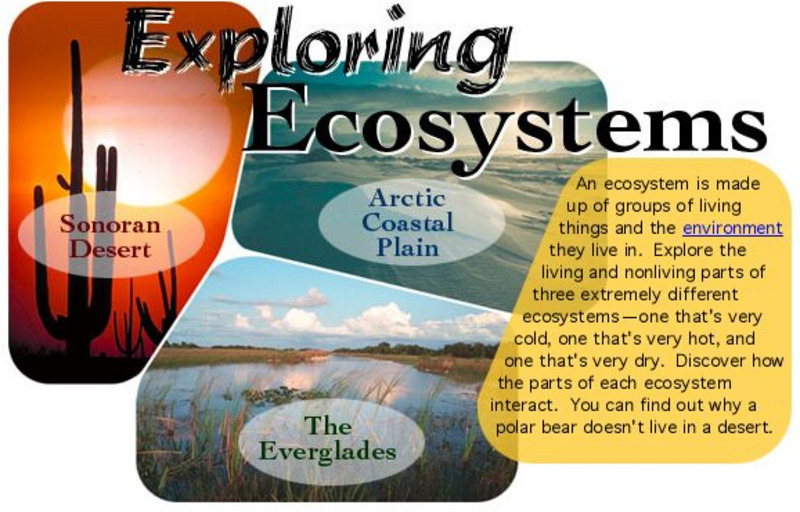
Harcourt: School Publishers: Exploring Ecosystems
Compare and contrast three very different ecosystems - the Sonoran Desert in Arizona, the Florida Everglades, and the Arctic Coastal Plain in Alaska. Learn what makes each of them unique, and about the adaptations plants and animals had...
Texas Instruments
Texas Instruments: Probing an Aquatic Ecosystem
In this activity, students' use a pH sensor and Temperature Sensor to measure and compare the pH and temperature of three aquariums over a period of several weeks. They will compare and understand how plants and animals affect the water...