Hi, what do you want to do?






APMonitor
Arduino TCLab for Engineering Education
The Temperature Control Lab is a plug-and-play Arduino device to teach programming, heat transfer, machine learning, data science, process dynamics, and control with real data. Two heaters and an LED are adjusted...
Zach Star
Are Engineering Jobs 'Hands On'?
In this video I discuss whether jobs in engineering are hands on, more computer work, or in the field. Some people might have the wrong image of an engineering job which may cause confusion down the road. The good news is...
NASA
NASA Hangout: Van Allen Probes Discoveries
NASA's Van Allen Probes revealed a new radiation belt around Earth
The Van Allen Probes mission discovered a previously unknown third radiation belt around Earth, revealing the existence of unexpected structures...
The Van Allen Probes mission discovered a previously unknown third radiation belt around Earth, revealing the existence of unexpected structures...
Curated Video
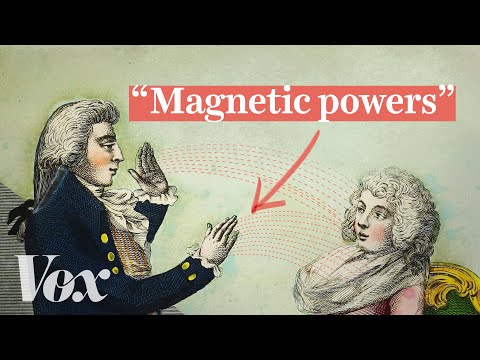
The phony health craze that inspired hypnotism
In the 1780s, a charismatic healer caused a stir in Paris. Help us make more ambitious videos by joining the Vox Video Lab. Learn more at href='http://bit.ly/video-lab' target='_blank' rel='nofollow'>at Scientific progress in the...

Crash Course
The Physics of Heat: Crash Course Physics #22
Compare and contrast the physics of heat flow with a well-designed video lesson. The 22nd installment of the Crash Course series is an overview of the physics of heat. After beginning with a discussion of thermal energy and heat, the...

Crash Course
Collisions: Crash Course Physics #10
Time for a crash course! The 10th installment in a video series describes the physics behind collisions. With a focus on momentum and energy, the narrator describes both elastic and inelastic collisions.

Crash Course
Electric Fields: Crash Course Physics #26
Help your classes visualize the invisible. The 26th episode in a Crash Course physics playlist highlights the fields created by charged particles. Using examples and diagrams, the presentation demonstrates the magnitude and direction of...

Crash Course
Optical Instruments: Crash Course Physics #41
How does a lens work? A thorough video lesson addresses this question by looking at the lenses of human eyes, telescopes, and microscopes. Light waves play an important role function of each of these objects. This is the 41st lesson in...

Crash Course
Engines: Crash Course Physics #24
Rev up your teaching with a lesson on engines! The 24th installment in a Crash Course physics series explains the basics of an engine through a discussion of thermodynamics. The instructor shows examples explains the efficiency of the...

Crash Course
Geometric Optics: Crash Course Physics #38
Light can be a mysterious phenomenon. Take away some of the mystery with an intriguing video lesson. The 38th lesson of the Crash Course physics series studies the movement of light waves. Topics include refraction and reflection as well...

Crash Course
DC Resistors and Batteries: Crash Course Physics #29
All circuits are not created equal! Building on the previous lessons in the Crash Course series, the 29th lesson explains how electric current flows through a circuit. It spends equal time discussing both series and parallel circuits.

American Chemical Society
How Do We Tell Temperature?
Explore the science behind thermometers. Rather than measuring temperature, thermometers track the movement of heat from hot to cold. The installment of the ACS Reactions series examines the chemical response that make thermometers work.