Hi, what do you want to do?






Multiverse
Rainbows of Light: The Visible Light Spectrum
Rainbows can teach us about the visible light spectrum. Learners observe multiple items that clearly display a rainbow to develop better connections. The lesson plan then explains wavelength using a rope to make...

Towson University
The Crucial Concentration
Which sports drink provides the best pick-me-up after the big game or grueling workout? It may not be the one you'd think! Food science is the focus in a surprising lab activity. Pupils use colorimetry to determine the amount of protein,...

NASA
Nasa: Tour of the Electromagnetic Spectrum: Visible Light
Visible light waves are the only electromagnetic waves we can see. We see these waves as the colors of the rainbow. Each color has a different wavelength. Red has the longest wavelength and violet has the shortest wavelength. When all...
Science Struck
Science Struck: Wavelength of Visible Light Spectrum
Explains where visible light fits into the electromagnetic spectrum and the wavelengths for the different colors we see.
Science Struck
Science Struck: Color Spectrum Chart With Frequencies and Wavelengths
Read about the visible light spectrum and learn the frequencies and wavelengths for each of the primary and secondary colors.
Khan Academy
Khan Academy: Light and Photosynthetic Pigments
What is light energy? Here we'll learn about the properties of light and how pigments such as chlorophylls absorb light energy.
Georgia State University
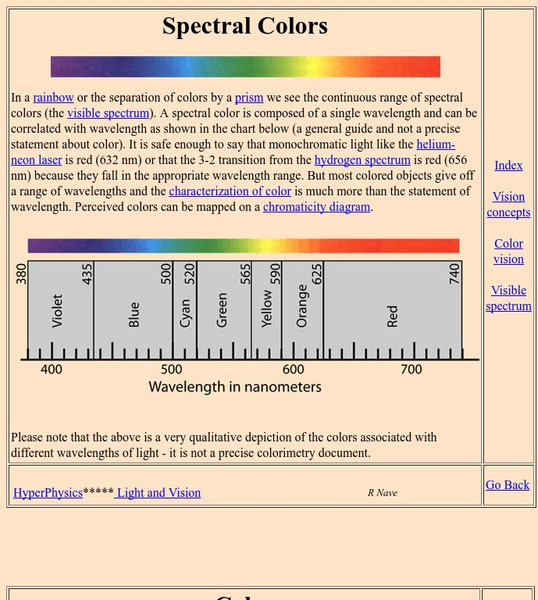
Georgia State University: Hyper Physics: Color
This site from Georgia State University discusses the location of visible light on the electromagnetic spectrum. Includes the wavelength values for various colors of light within the visible light spectrum.
NASA
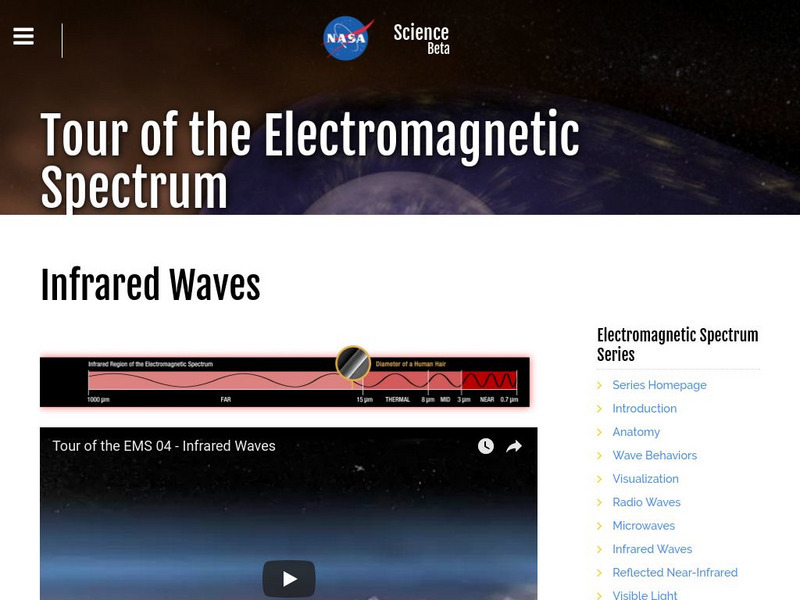
Nasa: Mission: Science: Electromagnetic Spectrum: Infrared Waves
Infrared light lies between the visible and microwave portions of the electromagnetic spectrum. Infrared light has a range of wavelengths, just like visible light has wavelengths that range from red light to violet.
Science Struck
Science Struck: Visible Color Spectrum Wheel
A brief explanation of the visible color wheel.
NASA
Electromagnetic Spectrum: Ultraviolet Waves
Ultraviolet (UV) light has shorter wavelengths than visible light. Though these waves are invisible to the human eye, some insects can see them. The specific wavelength values are given. Uses and applications of these waves are explained.
Georgia State University
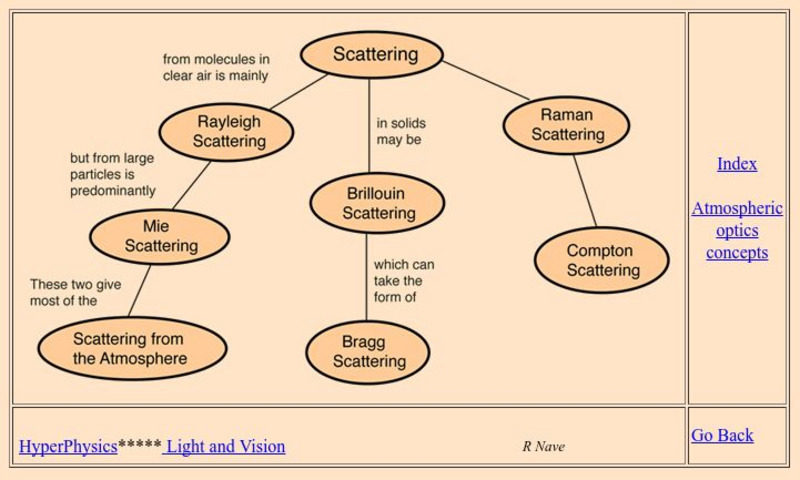
Georgia State University: Hyper Physics: Scattering Concepts
A collection of several pages explaining the principles which underlie Rayleigh scattering of light.
Physics Classroom
The Physics Classroom: Blue Skies and Red Sunsets
This high school resource shows how the blue of the skies and the red of the sunsets can be explained by the interaction of sunlight with atmospheric particles which causes scattering of light.
American Museum of Natural History
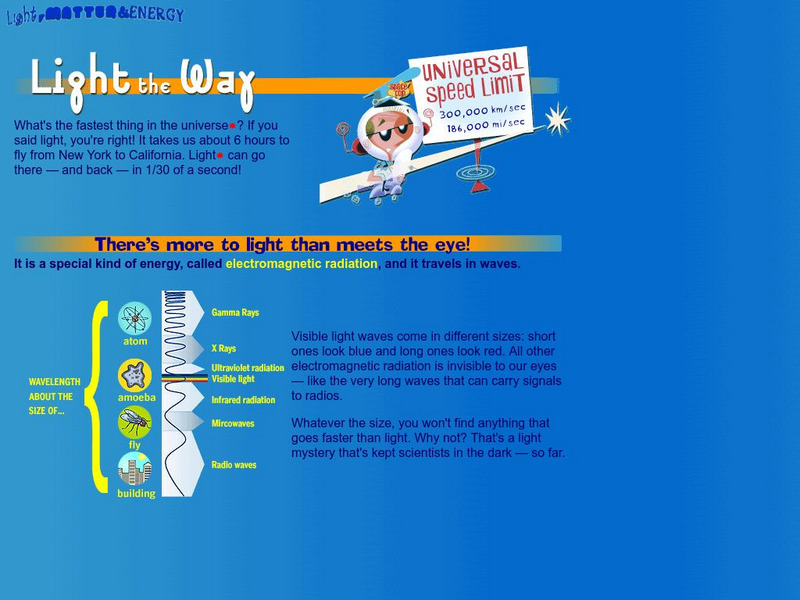
American Museum of Natural History: O Logy: Light, Matter, Energy: Light the Way
What is electromagnetic radiation and how does it work? Review a captioned graphic that explains electromagnetic radiation and the visible and invisible types of radiation on the electromagnetic spectrum.
NASA
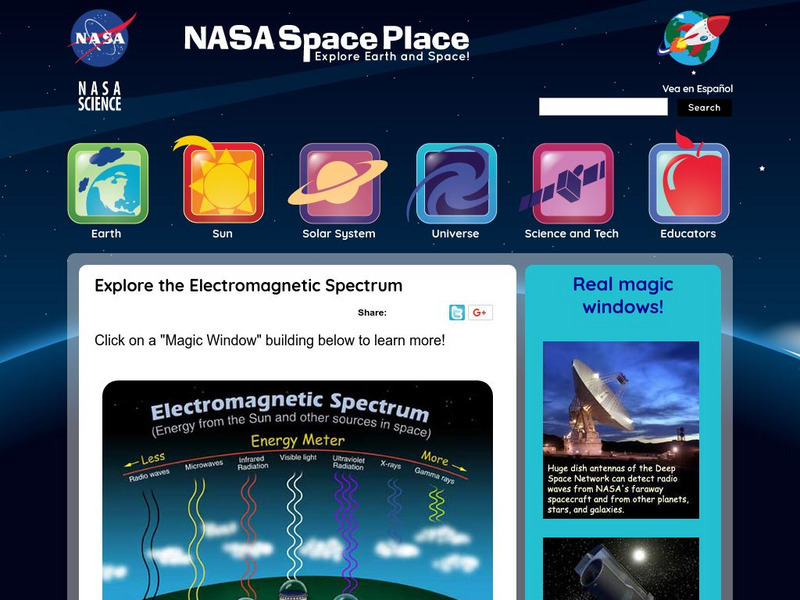
Nasa's the Space Place: A Trip to the Land of the Magic Windows
Explore the electromagnetic spectrum and learn about each type of energy on the spectrum.
NASA
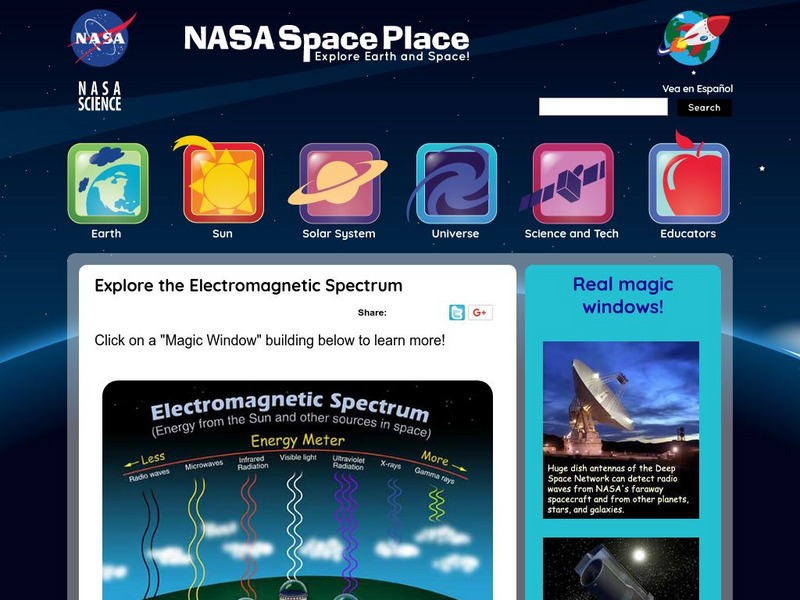
Nasa: The Space Place: The Land of the Magic Windows
This is a site from NASA that contains an interesting and fun way to learn about the electromagnetic spectrum. Kate receives a strange riddle from her grandfather. Find out what it says and go through the gateway to the Land of the Magic...
Oklahoma Mesonet
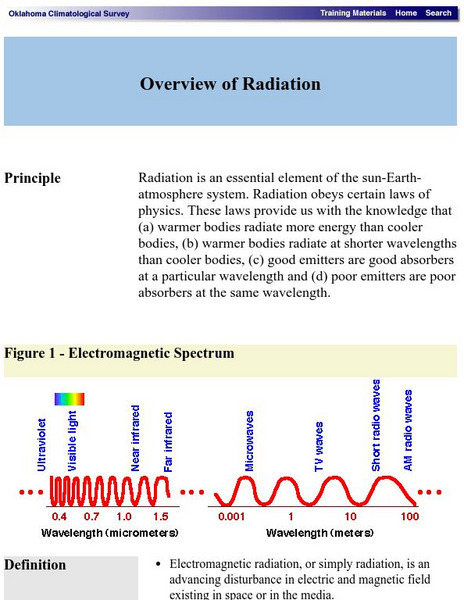
Oklahoma Climatological Survey: Overview of Radiation
This site details what radiation is, the physics of radiation, and radiative transfer as it occurs in nature. Content explores the electromagnetic spectrum, electromagnetic waves, properties of radiation, and solar radiation.