Hi, what do you want to do?






Fuse School
Denaturing of Enzymes
How do you make an enzyme stop working? The video explains the process of denaturing enzymes. It lists many uses for this process and examples that young scientists understand from experience.

Fuse School
Salt and Diet
Salt is necessary for your diet, but too much or too little and it causes health problems. These problems, as well as what salt does in your body, are the focus of a video that also looks at where salt is found in food and how much salt...

TED-Ed
Are Food Preservatives Bad for You?
It is safe to say that everything is best in moderation—including preservatives in food. Microbes and oxidation are the main reasons foods become spoiled. Thanks to preservatives, our foods end up having a longer shelf life. But what...

TED-Ed
Are Spotty Fruits and Vegetables Safe to Eat?
Are funky-looking fruits and vegetables dangerous? Not if you carefully wash them. Find out why by checking out this short video that explains the science behind the cosmetic problems.
Minute Earth
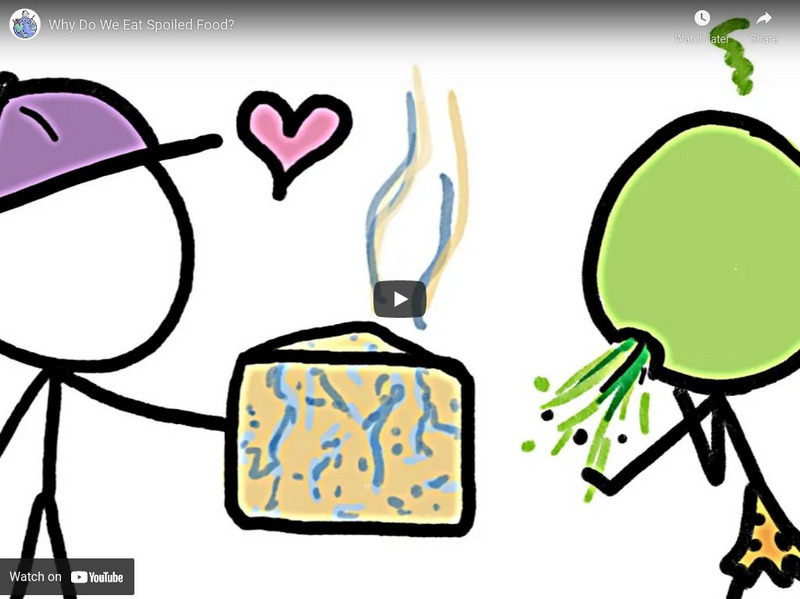
Minute Earth: Why Do We Eat Spoiled Food?
This video provides a brief explanation of the microbes that live in the foods we love. [3:19]
Science Friday Initiative
Science Friday: Fermenting With Sandor Katz
Sandor Ellix Katz, self-proclaimed "fermentation revivalist" and author of "The Art of Fermentation" (Chelsea Green Publishing, 2012) discusses the two "cultures." [2:14]

Science Friday Initiative
Science Friday: Food Failures: When Home Canning Goes Wrong
Jars broke? Lids buckled? Home canning expert Jessica Piper explains common preserving pitfalls. [17 mins. 8 secs.]

Science Friday Initiative
Science Friday: Food Fermentation: The Science of Sausage and Cheese
The chemistry behind sausage and cheese. [17 mins. 7 secs.]