Hi, what do you want to do?






American Chemical Society
Is Aspartame Safe?
How sweet it is! Is it possible for something that tastes so sweet to be bad for us? Young sweetener scientists get an in-depth look at aspartame with a video from the American Chemical Society's Reactions playlist. Content includes...

American Chemical Society
Sugar vs. High Fructose Corn Syrup - What's the Difference?
Sometimes learning can be pretty sweet! Get your class involved in the sugar-versus-high-fructose-corn-syrup debate with a video from a playlist on chemical reactions. Viewers see the similarities and differences between the two...

American Chemical Society
The Woman Who Saved the U.S. Space Race (And Other Unsung Scientists)
Check out these Wonder Women! Introduce young scientists to some of the most amazing ladies the scientific community has seen. With stories from medicine, agriculture, and the Space Program, learners witness how women have played a...

American Chemical Society
Did You Know Honey is Really Bee Puke?
Despite the title, here is a video that makes honey even sweeter! Biology scholars journey inside a beehive with a fascinating video from the American Chemical Society's Reactions playlist. Pupils learn about the social structure of a...

American Chemical Society
Can I Still Eat This?
The United States sends 133 billion pounds of edible food to landfills every year. A lesson from the ACS Reaction series discusses the chemical reactions that cause food to change over time. Some reactions make food taste different while...

American Chemical Society
Vertical Farming
Create a vegetation high rise! Scholars study the trend of vertical farming and the requirements needed for a successful crop. The lesson from the ACS Reactions series explores the advantages and disadvantages in relation to traditional...

Teacher's Pet
Carbohydrates
What is the difference between simple and complex carbohydrates? The video answers that question and more. It covers monosaccharides, disaccharides, and polysaccharides.

MinuteEarth
Why Don't Sled Dogs Ever Get Tired?
What is the sled dog's secret to running for days on end without tiring? Turns out the answer is in their metabolism. Explore the metabolic processes of these amazing sled dogs. The science shows they are able to burn their proteins and...

SciShow
High-Fructose Corn Syrup: The "Dark Lord" of Nutrition
High fructose corn syrup (HFCS) can be found in many of the things people consume—yogurts, baked goods, canned goods, condiments, and beverages. An enlightening video explores high fructose corn syrup and its bad reputation. The narrator...

SciShow
Social Interaction and the 'Bliss Molecule'
Increased oxytocin helps people read facial expressions with greater accuracy. Video explores the way this hormone impacts social interactions and highlights the way scientists perform research to confirm the findings. Then the video...

Bozeman Science
Carbohydrates
Explain the purpose and structure of carbohydrates with a scientific video that goes in depth about monosaccharides, disaccharides, oligosaccharides, and polysaccharides. It offers an explanation of how they grow and shrink through...

University of California
What Does Sugar Actually Do To Your Body?
Eat less sugar; you are sweet enough already. The video explains how the body processes glucose and fructose, then highlights the differences and results of both. It also includes suggestions for staying healthy.

Ricochet Science
Carbohydrates
Do you know what table sugar and the exoskeleton of crustaceans have in common? They are both types of carbohydrates. The video explains the three types of carbohydrates: monosaccharides, disaccharides, and polysaccharides. It gives...

TED-Ed
How Do Carbohydrates Impact Your health?
To carb or not to carb, that is the question. Whether it is better to dine on simple or complex carbs, or none at all, is the focus of this sweet video that examines the relationship between the glycemic index of foods and metabolic...

Curated OER
How Much Sugar is in a Can of Soda?
Compare the amount of sugar in soda and fruit juice. You won't believe it! Show this to your class and have them think twice about their daily soda intake!

PBS
Pbs Learning Media: Sugar: Master of Disguise | the Healthy Kids Project
This video explains why too much sugar is unhealthy.
PBS
Pbs Learning Media: Sugary Drink Smarts
In this video, Mackenzie teams up with Molly Morgan, a registered dietician, Tim, and Derek, Binghamton Senators hockey players, to show viewers the amount of added sugar in some of the most popular beverages. [7:37]
PBS
Pbs Learning Media: Carbohydrates and Sugar
These Fizzy's Lunch Lab videos and lesson plan provide an informative overview of food and nutrition topics with an emphasis on carbohydrates and sugar. Using these materials, students will understand and categorize foods that are made...
Science for Kids
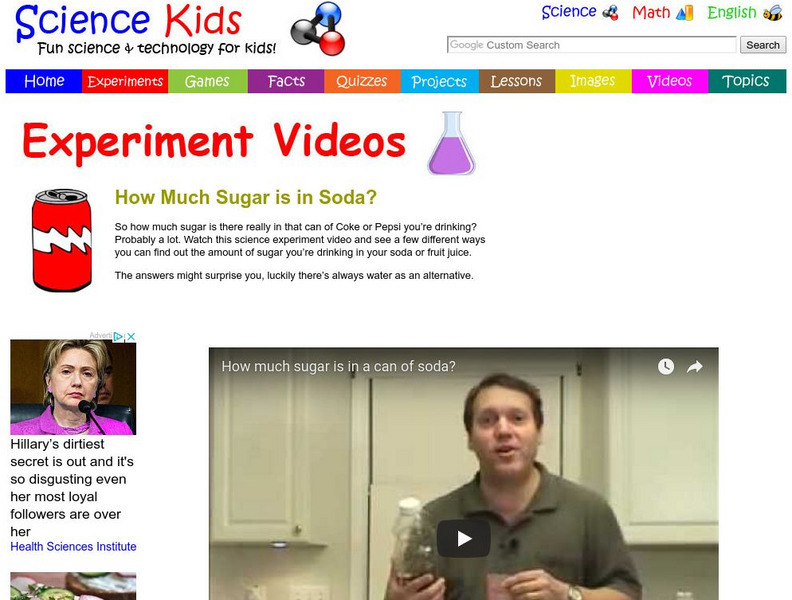
Science Kids: Experiment Videos: How Much Sugar Is in Soda?
Check out a few different ways you can find out the amount of sugar you're drinking in your soda or fruit juice. [4:09]
Science Friday Initiative
Science Friday: Should Sugar Be Regulated Like Alcohol?
Pediatrician Robert Lustig says fructose can be as harmful as alcohol, if taken in large quantities. Science Friday discusses this issue on this episode.
Other
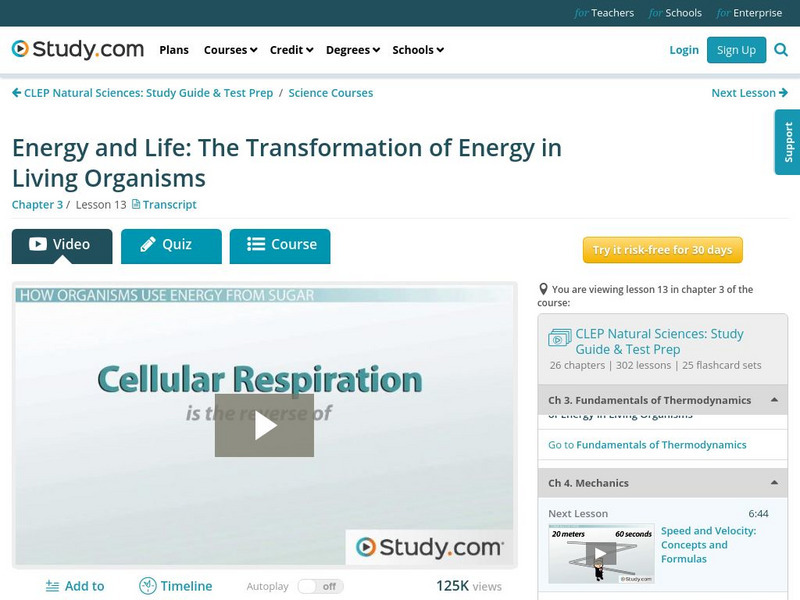
Energy and Life: The Transformation of Energy in Living Organisms
While the sun is an excellent source of energy, not all forms of life can utilize the sun's energy directly. This lesson describes how plants transform the sun's energy into potential energy stored in sugar, how living organisms utilize...