Hi, what do you want to do?






FuseSchool
Animal Classification
All living things are grouped into 5 kingdoms. In this video we are going to look at the animal kingdom in more detail. There are thought to be over 7.5 million species of animal on planet Earth, of which 900,000 have been described....
Visual Learning Systems
Introduction to Arthropods
This video introduces the concept of arthropods and highlights their significance in the natural world. It explains that arthropods, such as horseshoe crabs, bees, and spiders, have common characteristics like an exoskeleton, jointed...
Curated Video
Biological Vectors
REAL WORLD SCIENCE: Biological Vectors and Infectious Diseases
Using incredible videography, photos, animation and graphics, this information-packed video introduces students to biological vectors. Viewers will...
Using incredible videography, photos, animation and graphics, this information-packed video introduces students to biological vectors. Viewers will...

Bill Nye
Bill Nye The Science Guy on Insects
Queen Latifah makes a cameo in this Bill Nye episode on insects. The facts taught are that the queen bee is in charge of a bee colony, ants can dig tunnels, and exoskeletons support, strengthen, and protect the insect's body. While you...

Nature League
What Are Invertebrates? - Lesson Plan
Insects, and other invertebrates outnumber vertebrates—segmented-legs down! The first in a five-part series of videos from an Invertebrates series introduces these organisms in all their spineless glory. Each invertebrate phyla takes the...

PBS
The Trouble With Trilobites
Trilobites survived on Earth for longer than mammals have, so what was their secret? From their evolution to diversity, they survived multiple large changes in the environment—and even flourished. Then, in the matter of less than a...

The Brain Scoop
Millipedes: The First Land Animals
Scientists need help identifying tens of thousands of species of millipedes. The Brain Scoop video, part of an Insects and Invertebrates playlist, discusses the unique features of millipedes. It explains their importance to the...

The Brain Scoop
Spiders: The First Web Developers
"You can always out run a spider." - Petra Sierwald, associate curator of insects at the Field Museum. Scientists identified more than 45,000 species of spiders, and an enchanting video explains how they identify each species as unique....

FuseSchool
Animal Classification
So many animals, so many characteristics—how do we classify them all? A short tour of taxonomy awaits within a helpful Fuse School video on Evolution. Science scholars see how scientists sort animals into the main classes and what traits...

Deep Look
Meet the Dust Mites, Tiny Roommates That Feast on Your Skin
Don't bug out, but around 100 different animals live in your home with you! The video details how they arrived, what they want, and why they are thriving. Most are harmless, but some cause illnesses in ways you might not expect.

Be Smart
You Are An Upside-Down Lobster
Lobsters can regrow limbs, a trick humans can't do; however, according to this video, the placement of the spine and organs on the dorsal and ventral sides of a lobster is similar to the human body plan. The video also includes the...

Crash Course
Complex Animals: Annelids and Arthropods
Introduce your class to the importance of segmentation in evolutionary history with a video that explain how segmentation permitted the development of complex animals. The narrator analyzes examples of annelids and arthropods in...

Smithsonian Institution
National Museum of Natural History: Qrius: Adaptations Inside the Insect Zoo
This webcast relates the research being done to understand the adaptations insects and other arthropods make to survive in various conditions. [29:15]

National Pest Managment Association
Pest World for Kids: Season 1: Episode 3
Learn about a variety of interesting pests like how to be a horrible host, rolly pollies with cocktail sauce and who's afraid of a little vole. [2:46]
National Pest Managment Association
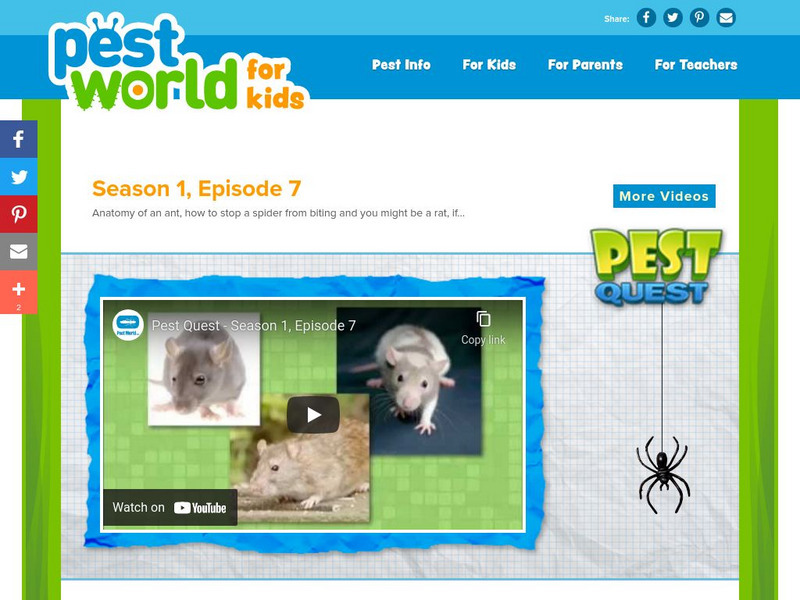
Pest World for Kids: Season 1: Episode 7
Learn about a variety of interesting pest facts like the anatomy of an ant, how to stop a spider from biting and, what makes rat a rat. [2:54]
Science Friday Initiative
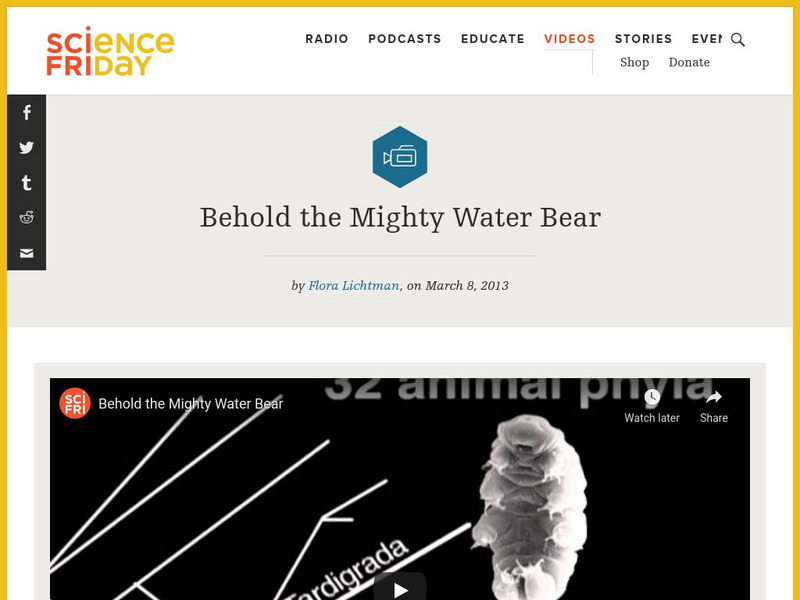
Science Friday: Behold the Mighty Water Bear
Water bears, also known as tardigrades, can survive boiling, freezing, the vacuum of space and years of desiccation. Biologist Bob Goldstein, of the University of North Carolina Chapel Hill, describes water bears and explains why he...
Sea Studios Foundation
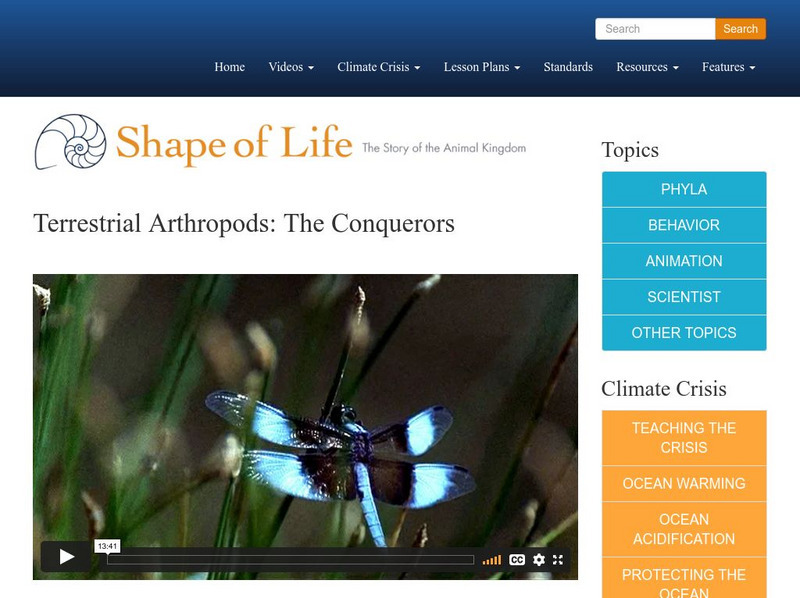
Shape of Life: Terrestrial Arthropods: The Conquerors
A video exploring arthropods which were the first animals to venture onto land and spread over the earth. Their body plan allowed them to diversify and adapt to every environment, including the air, inventing new ways to extract oxygen...
Sea Studios Foundation
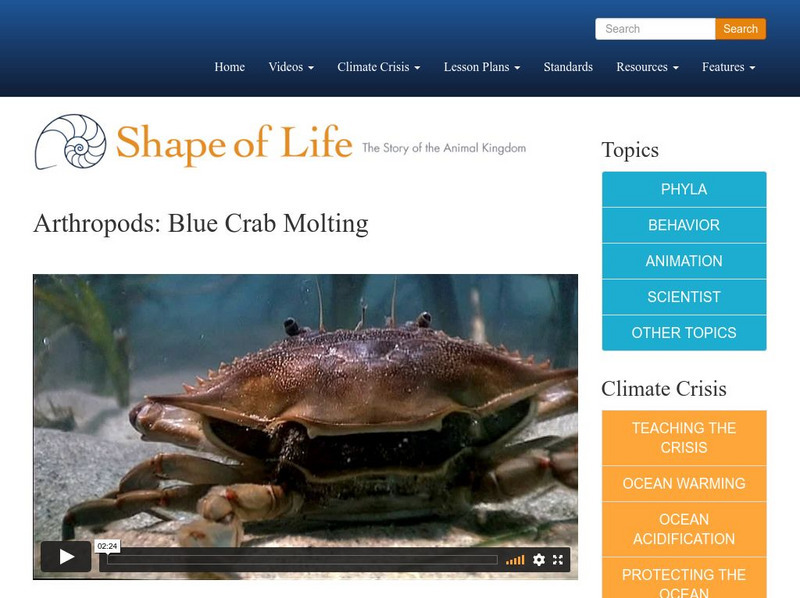
Shape of Life: Arthropods: Blue Crab Molting
Did you know an arthropods' exoskeleton must be shed or molted when they grow. This sequence shows how a blue crab must pull its legs and body out of the old shell. [2:24]
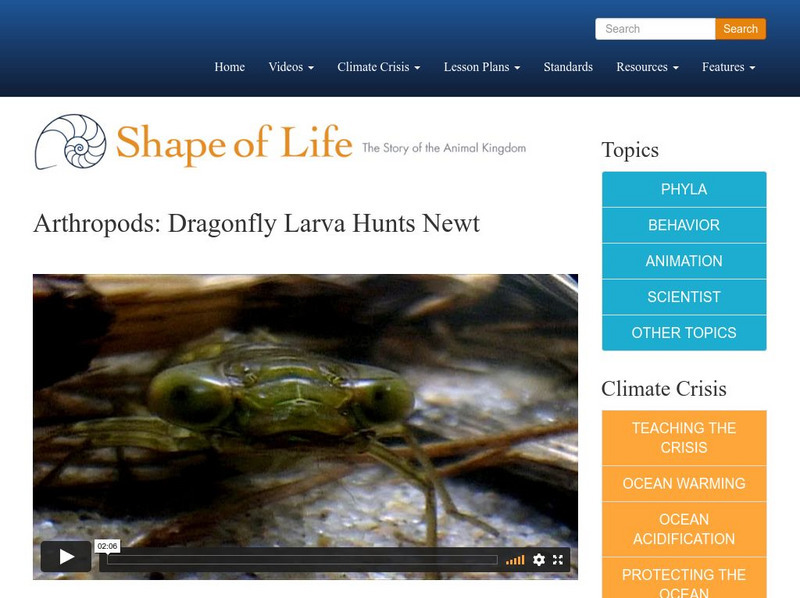
Sea Studios Foundation
Shape of Life: Arthropods: Dragonfly Larva Hunts Newt
A video that shows how a dragonfly larva hunts a newt. See how a dragonfly larva stalks prey underwater and catches a newt. [2:06]
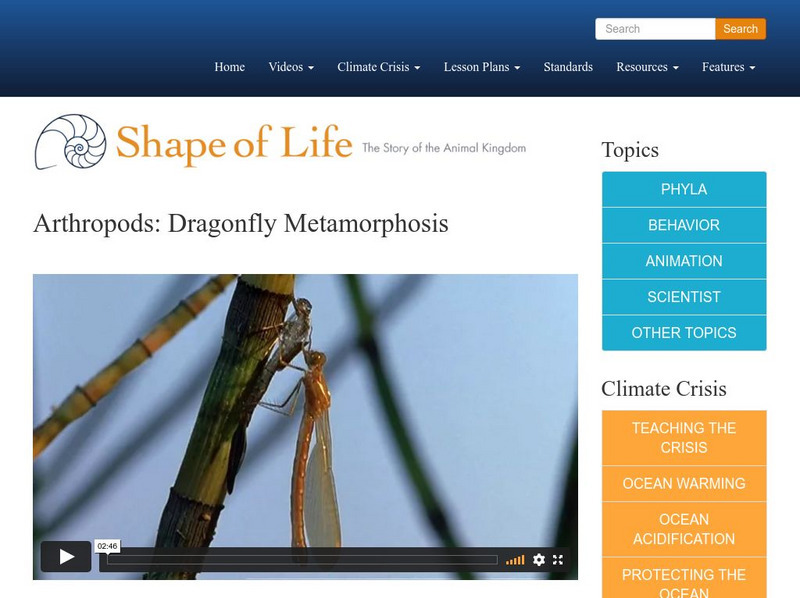
Sea Studios Foundation
Shape of Life: Arthropods: Dragonfly Metamorphosis
See a dragonfly's metamorphosis with this video. Watch a dragonfly larva transform into a winged adult. [2:46]
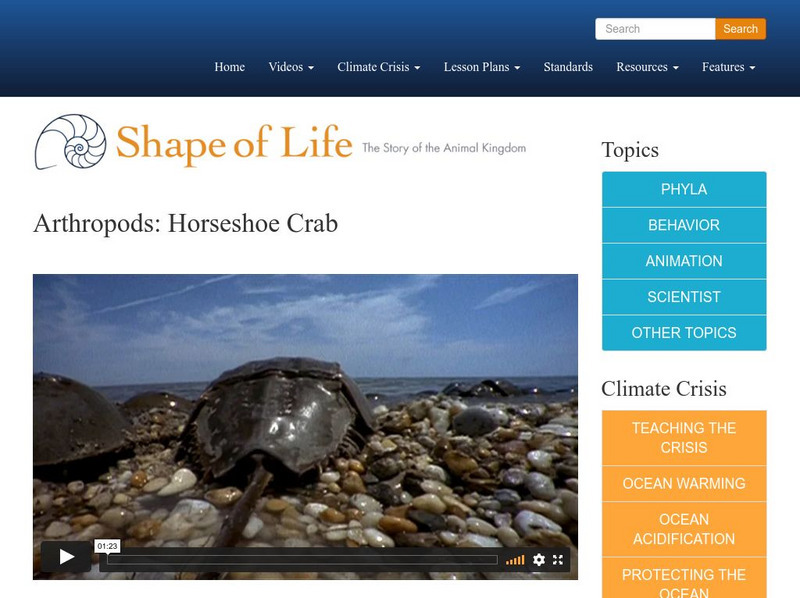
Sea Studios Foundation
Shape of Life: Arthropods: Horseshoe Crab
Learn about how horseshoe crabs mate in the water but lay their eggs in sand. This video shows you how the crab allow their young develop safe from marine predators. [1:23]
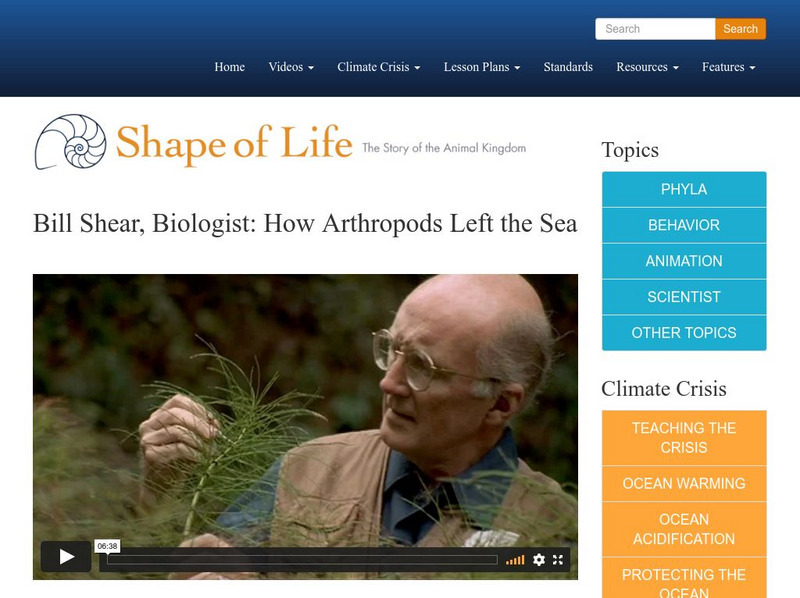
Sea Studios Foundation
Shape of Life: Bill Shear, Biologist: How Arthropods Left the Sea
Follow Bill Shear as he investigates how arthropods made the transition to living on land by looking at microfossils preserved along with fossil plants. In this video watch as he extracts tiny fossils by dissolving the rock that they are...
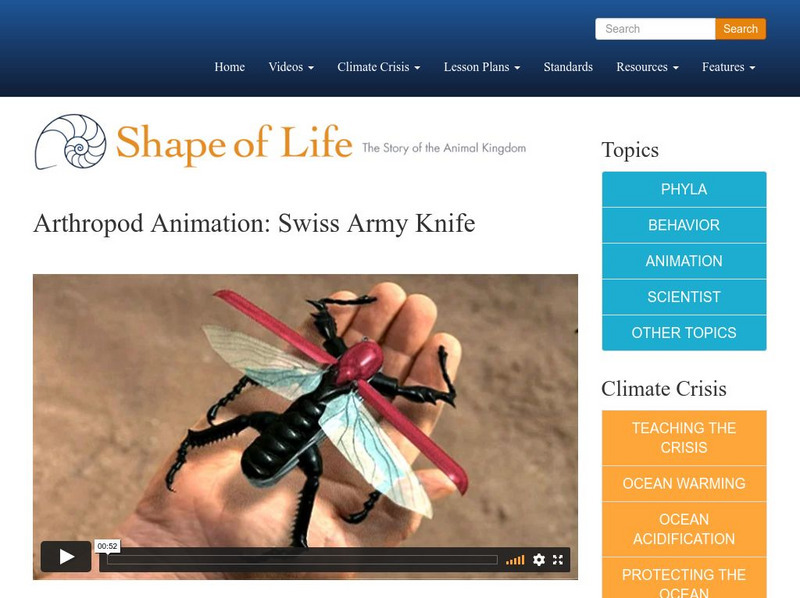
Sea Studios Foundation
Shape of Life: Arthropod Animation: Swiss Army Knife
The blades of the Swiss army knife become the claws, legs, antennae and wings that arthropods evolved to survive on land. [0:52]
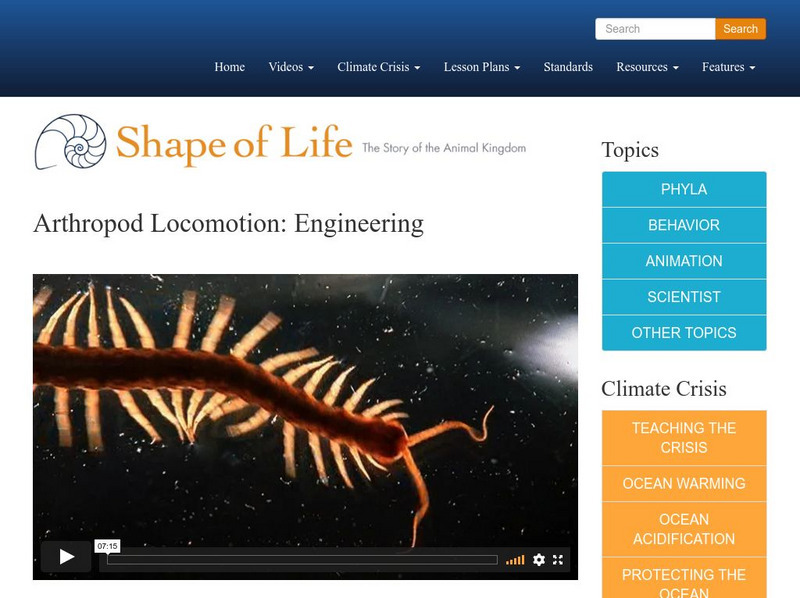
Sea Studios Foundation
Shape of Life: Arthropod Locomotion: Engineering
Robert Full is interested in the biomechanics of arthropod movement. Arthropods move low to the ground using their legs in a tripod fashion, which is inherently stable. Their skeleton provides local control over movement. But the secret...